
Product Description
Product Description
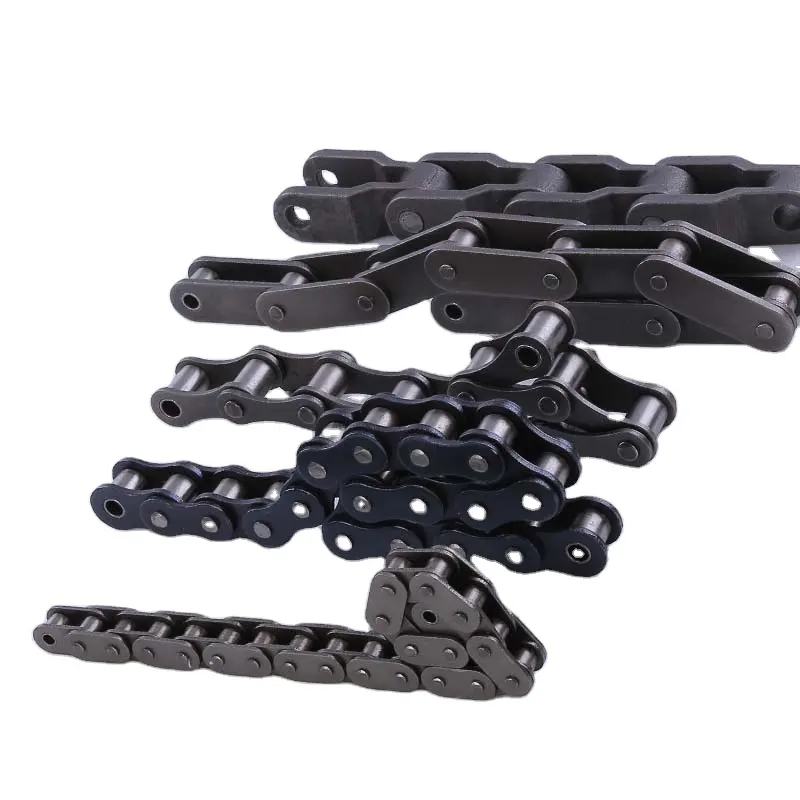
Agricultural roller chain on Agricultural Machine Equipment, welded steel mill chain, welded steel drag chain, cast fixed pin chain, pintle chain, drop forged link chain and Engineer Class Driving Chain, with alloy steel and stainless steel selection according to your requirement
1, Chain types: agricultural chain, drop forged rivetless chain, Roller Chain, conveyor chain, sugar industry chain, palm oil industry chain, asphalt industry chain,elevator conveyor industry chain, double flex chain, pintle chain, weld steel drag chains, malleable chain etc;
2, Main materials: It is 40Mn. 40Cr, 45Mn alloy steel or SUS304 for plates, 10#, 20#, 20CrMnMo, 30CrMnTi for pins and rollers;
3, Heat treatment: Carburizing, Austemper Stressing, nitro-caburizing harden etc;
4, Surface: Shot peening, black, blue or original;
5, Package way: Plastic bag+ carton box+ plywood case
| S type steel agricultural chains | |||||||||
| Chain No. | Pitch | Roller diameter | Width between inner plates | Depth of chain plates | Pin diameter | Pin length | Plate thickness | Ultimate tensile strength | Weight per meter |
| p | d1(Max) | b1(min) | h2(Max) | d2(Max) | b4(Max) | T(Max) | Qo(min) | Q | |
| mm | mm | mm | mm | mm | mm | mm | Kn | Kg/m | |
| CA550 | 41.4 | 16.87 | 19.81 | 13.5 | 7.19 | 38 | 2.8 | 51.2 | 1.94 |
| CA550V | 41.4 | 16.8 | 19.05 | 13.5 | 8.28 | 39.1 | 3 | 68.7 | 2.24 |
| CA555 | 41.4 | 16.87 | 12.7 | 19.8 | 7.19 | 32 | 3.1 | 56 | 1.72 |
| CA557 | 41.4 | 17.78 | 20.24 | 19.8 | 8 | 40.8 | 3.1 | 74.3 | 2.6 |
| CA620 | 42.01 | 17.91 | 24.51 | 17.3 | 7.19 | 45.2 | 3.25 | 55.1 | 2.35 |
| CA2060H | 38.1 | 11.91 | 12.7 | 17.3 | 5.94 | 31.6 | 3.25 | 40.5 | 1.45 |
| CA2063H | 38.1 | 11.89 | 12.7 | 17.3 | 5.94 | 34.2 | 2.8 | 40.5 | 1.65 |
| CA550F4 | 41.4 | 14.35 | 20.24 | 17.3 | 7.14 | 38.5 | 2.8 | 52 | 1.78 |
| CA550F5 | 41.4 | 16.66 | 20.24 | 17.3 | 7.14 | 38.5 | 3.25 | 52 | 1.97 |
| CAE44151 | 28.575 | 15.88 | 16.2 | 17.3 | 7.92 | 38.9 | 2.5 | 64.5 | 2.73 |
| 38.4R | 38.4 | 15.88 | 19.05 | 17.3 | 6.92 | 36.4 | 3 | 41.2 | 1.7 |
| 38.4V | 38.4 | 15.88 | 18 | 17.3 | 6.92 | 38 | 3 | 50 | 1.83 |
| 38.4VB | 38.4 | 15.88 | 19.05 | 26.2 | 8.28 | 39.4 | 2.8 | 62.5 | 2.17 |
| 55VD | 41.4 | 17.8 | 23 | 26.2 | 8.22 | 42.4 | 3 | 45 | 2.34 |
| S62F3 | 41.91 | 19.05 | 25.4 | 26.2 | 8 | 44.8 | 3 | 58.7 | 3.12 |
| CA960 | 41.4 | 17.78 | 22.61 | 8.9 | 43 | 3 | 72.6 | 6.94 | |
| CA550VF2 | 41.4 | 16.8 | 19.05 | 8.28 | 38.8 | 3 | 68.7 | 2.13 | |
| CA550H | 41.4 | 16.74 | 20 | 26.2 | 7.14 | 39.1 | 3 | 60.8 | 2 |
Detailed Photos
Product Parameters
Packaging & Shipping
1. Inner packing: Poly bag, air bubble bag, carton according to buyer’s request.
2. Outer packing: OSB case or pallet.
3. Please remember to leave the correct contact ADDRESS information for delivery.
Our Advantages
Company Profile
We are a leading manufacturer of mechanical transmission spare parts, as well as several years 1 of reliable and trustworthy vendors. Our main items are roller chain, conveyor chain, agricultural chain, sugar industry chain, palm oil industry chain, asphalt industry chain,elevator conveyor industry chain etc.
At present, For South American, European, and Asian market, our superior products are fabricated according to your requirement and our quality meets ISO, ASME, DIN standard.
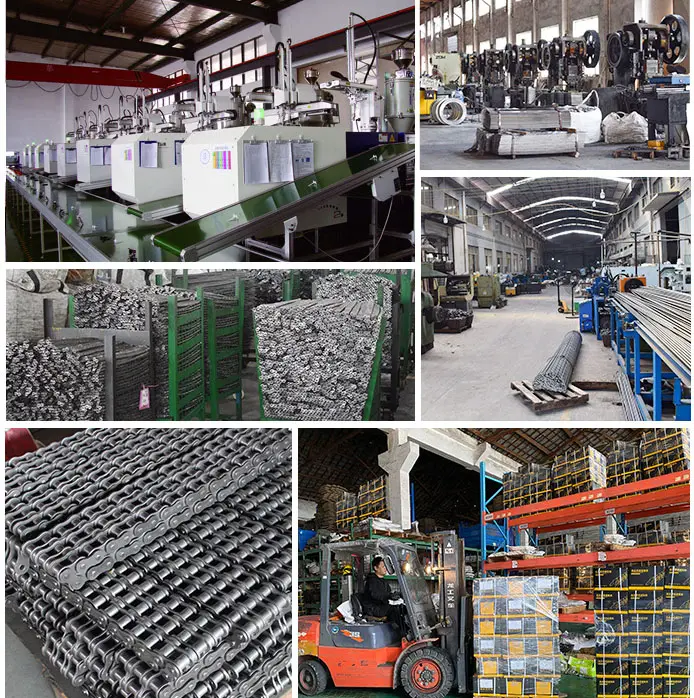
Please watch our process steps as below
(1) punch its outer plate and inner plates
(2)Shot peening workshop
(3) heat treatment workshop
(4) assembly preparation
(5) pins process
(6) Tensile Properties Test before shipment
After Sales Service
Our products can be repaired or replaced the new parts with free cost in six months.
FAQ
Question:
1.Q:How about mould cost?
A: primarily depend on : 1.Drawing, 2.material, 3.weight and quantity.
We need to know the structure of each parts to analyze the mold solution by:
1) –Complete design drawing, product model or actual sample —– the best way
–PDF drawing with complete dimension for each parts
–Clearly photos for each parts with more angle-views to show every features.
2)The materials, technical parameters and surface treatments.
technical parameters: tell us about its model, pitch, roller diameter, width between inner plates, attachment type, outside drawing etc.
3)The quantity of order.
2.Q:How to control the product processing?
A: The processing report or pictures will be sent to the customer every week/ each month for review.
3.Q:Who will own the mould?
A:Customer, also the mould can be kept in our factory for future order.
4.Q:How long do you make your quotation?
A:After receiving detail informations we will quote in 1 to 3 days.
5.Q: MOQ? —
small chain type: if its pitch is less than 38.10mm and its thickness is less than 5mm, MOQ is 1500 CHINAMFG on these roller chains or conveyor chains;
middle chain type: MOQ is 1000 CHINAMFG on these roller chains or conveyor chains;
big chain type: if its pitch is more than 76.20mm and its thickness is more than 10mm, MOQ is 200 CHINAMFG on these roller chains or conveyor chains;
I hope we can do business together, and look CHINAMFG to hearing from you soon
| Standard or Nonstandard: | Standard |
|---|---|
| Application: | Agricultural Machinery |
| Surface Treatment: | Carburizing and Quenching |
| Structure: | Roller Chain |
| Material: | Alloy |
| Type: | Short Pitch Chain |
| Samples: |
US$ 8.8/Meter
1 Meter(Min.Order) | |
|---|
| Customization: |
Available
| Customized Request |
|---|
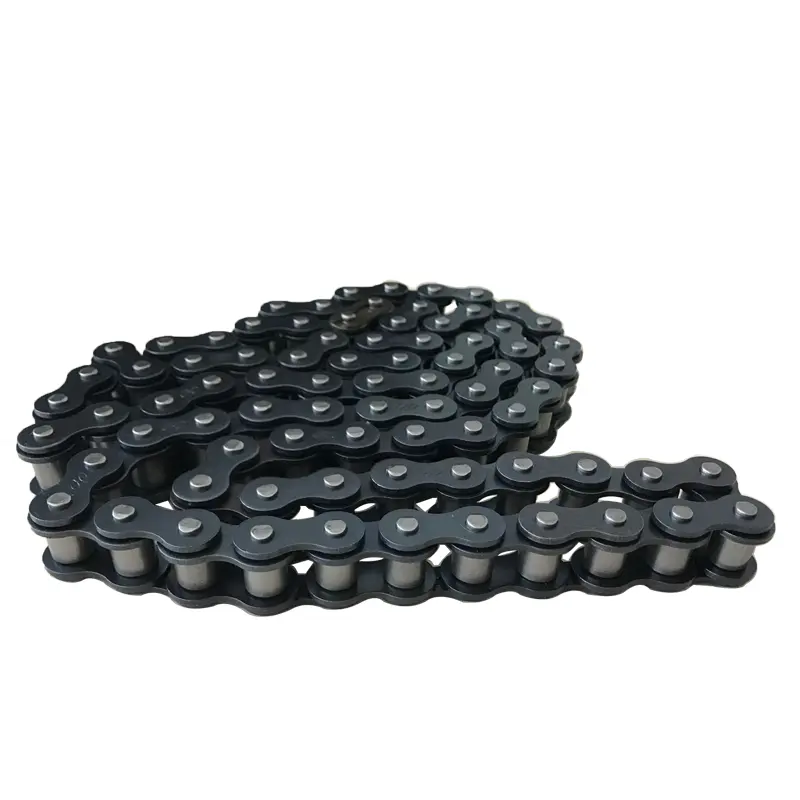
How do roller chains perform in extreme weather conditions?
Roller chains are designed to perform reliably in a wide range of operating conditions, including extreme weather conditions. Here’s a detailed answer to the question:
1. Temperature Extremes: Roller chains can withstand a wide range of temperatures, both high and low. The performance of the chain depends on the specific material used and its temperature rating. For example, stainless steel chains are suitable for high-temperature applications, while specialty chains with low-temperature lubricants are available for cold environments.
2. Corrosion Resistance: Roller chains can be manufactured using corrosion-resistant materials such as stainless steel or with specialized coatings to enhance their resistance to rust and corrosion. This makes them suitable for outdoor applications where exposure to moisture, humidity, and other environmental factors is common.
3. Lubrication: Proper lubrication is crucial for the performance of roller chains in extreme weather conditions. Lubricants with suitable viscosity and temperature range should be used to ensure smooth operation and minimize wear. In some cases, lubrication-free chains with self-lubricating properties can be used to eliminate the need for external lubrication.
4. Sealing and Protection: Roller chains can be equipped with additional sealing mechanisms to protect against the ingress of dirt, dust, and other contaminants. Sealed or encapsulated chains feature protective covers or seals that prevent debris from entering the chain and affecting its performance, making them more suitable for extreme weather conditions.
5. Maintenance and Inspection: Regular maintenance and inspection are essential for ensuring the optimal performance of roller chains in extreme weather conditions. This includes cleaning the chains, checking for signs of wear or damage, and replacing any worn-out components. Proper tensioning and alignment should also be maintained to prevent premature failure.
It’s important to consult the manufacturer’s specifications and recommendations for the specific roller chain and its intended application in extreme weather conditions. By selecting the appropriate materials, lubrication, and protection mechanisms, roller chains can provide reliable and efficient power transmission even in challenging environmental conditions.
How do roller chains handle static loads?
Roller chains are primarily designed for transmitting power and handling dynamic loads, which involve motion and varying forces. However, roller chains can also handle static loads to some extent. Here’s a detailed answer to the question:
1. Load Distribution: When a roller chain is subjected to static loads, the weight or force is evenly distributed across multiple rollers and pins. This helps to distribute the load more effectively and reduces stress concentrations on individual components. The load is transferred from one roller to another through the pins, ensuring a more balanced distribution.
2. Stiffness: Roller chains possess a certain degree of stiffness that enables them to resist static loads. The rigid construction of the chain, including the link plates and pins, helps maintain the integrity of the chain under static conditions. This stiffness allows the chain to support the applied load without excessive elongation or deformation.
3. Lubrication: Proper lubrication is essential for roller chains to handle static loads effectively. Lubrication helps reduce friction and wear, which can occur even under static conditions due to the weight of the load. Adequate lubrication ensures smooth movement of the chain and minimizes the risk of surface damage or increased friction during load-bearing.
4. Chain Preload: In some cases, applying a pre-load or initial tension to the roller chain can help improve its ability to handle static loads. The pre-load helps to eliminate any slack or looseness in the chain, enhancing its rigidity and reducing the potential for excessive elongation or misalignment when subjected to static forces.
While roller chains can handle static loads, it’s important to note that they are primarily designed for dynamic applications involving motion. Excessive static loads or prolonged exposure to static conditions may lead to increased wear, elongation, or deformation of the chain. In scenarios where the majority of the load is static, alternative power transmission systems or load-bearing mechanisms may be more suitable.
What are the signs of roller chain wear and when should it be replaced?
Roller chain wear is a natural occurrence due to the repetitive motion and load-bearing nature of the chain. Recognizing the signs of wear is important to ensure the safe and efficient operation of the chain. Here’s a detailed answer to the question:
1. Elongation: Roller chains can elongate over time due to wear on the pins, bushings, and rollers. To check for elongation, measure the distance between a specific number of links (e.g., 10 or 12) over a known length. If the measured distance exceeds the standard pitch length, it indicates chain elongation and the need for replacement.
2. Chain Slack: Excessive chain slack or sag is another sign of wear. When the chain becomes elongated, it fails to maintain the proper tension, resulting in increased slack. Excessive chain slack can cause poor engagement with sprockets, resulting in skipping or jumping and affecting the overall performance of the chain.
3. Misalignment: As a roller chain wears, it may start to misalign with the sprockets. This misalignment can cause the chain to ride unevenly on the sprocket teeth, leading to accelerated wear on the chain and sprockets. If you notice the chain consistently riding to one side of the sprocket, it may be a sign of wear and misalignment.
4. Chain Noise: Worn roller chains can produce increased noise during operation. Excessive wear on the chain components can cause rattling, clicking, or grinding sounds. Unusual noises should be investigated, as they may indicate significant wear or damage to the chain.
5. Visible Signs of Wear: Inspect the chain visually for signs of wear, such as rust, discoloration, or visible damage to the rollers, pins, or bushings. Excessive wear on these components can affect the chain’s ability to properly engage with the sprockets and transmit power efficiently.
When to replace a roller chain depends on various factors, including the severity of wear, the criticality of the application, and the manufacturer’s recommendations. It is generally recommended to replace a roller chain when it has elongated beyond the allowable limits, exhibits excessive wear, or shows signs of damage that can compromise its performance and safety.
Regular inspection and maintenance of roller chains are essential to identify signs of wear and ensure timely replacement. Replacing the chain at the appropriate time helps prevent unexpected failures, reduces downtime, and maintains the overall efficiency of the machinery or equipment.


editor by CX 2023-11-02