
Product Description
ZheJiang CHINAMFG Conveying Equipment Co.,Ltd
Product Description
Bush roller chain(used in horizontal scraper conveyor)
1.Chains adopt high quality medium-carbon alloy steel, chain plate material is 40Mn, pin and roller material is 40Cr. High quality material and good heat treatment guarantee excellent anti-shearing force and tensile strength during working and have good looking.
2.Model: GLF For TGSS flat scraper conveyor, install flat scrapper
General & Dimension(Material: Carbon Steel, Stainless Steel)
| Type |
Pitch P mm |
between inner plates b1 mm |
Bush Diameter d mm |
Pin Diameter d1 mm |
Bush Diameter d2 mm |
Plate Width H mm |
Plate Thickness T mm |
Flight Attachment (mm) | Rated Strength KN |
|||
| Width L |
Distance L1 |
Distance L2 |
diameter D |
|||||||||
| GLF66.5(5-6)D
|
66.5
|
26.5
|
22.23
|
12.7
|
16.23
|
30
|
5/6
|
160 | 102 | / | 2-Φ9X14 | 140
|
| 230 | 95 | 195 | 4-Φ9X14 |
|||||||||
| 270 | 102 | 228 | ||||||||||
| GLF66.675(5-6)D
|
66.675
|
26.5
|
22.23
|
12.7
|
16.23
|
30
|
5/6
|
182 | 90 | 150 | 4-Φ9X14
|
140
|
| 215 | 95 | 195 | ||||||||||
| 295 | 95 | 195 | ||||||||||
| GLF100(6)
|
100
|
38.5
|
36.0
|
16.0
|
21.6
|
40
|
6
|
170 | 115 | 2-Φ9X14 | 180
|
|
| 225 | 95 | 195 | 4-Φ9X14
|
|||||||||
| 294 | 115 | 245 | ||||||||||
| 370 | 155 | 255 | ||||||||||
| GLF125(6)D |
125 |
32.5 |
25.0 |
18.0 |
20.00 |
50 |
6 |
300 | 115 | 245 | 4-Φ9X14 |
200 |
| 370 | 130 | 330 | ||||||||||
| GLF160(8)D×385 | 160 | 36.5 | 36.0 | 17.8 | 24.50 | 50 | 8 | 385 | 130 | 330 | 4-Φ11X15 | 220 |
| GLF200(8)D×467 | 200 | 42.5 | 40.0 | 20.0 | 30.00 | 60 | 8 | 467 | 160 | 420 | 4-Φ13X17 | 250 |
| 81X | 66.27
|
26.99
|
23.02
|
11.1
|
16.23
|
28.6 | 4 | Welding attached plate, length and hole size customized Wood transport chain according to customer requirements
|
107 | |||
| 81XH | 31.4 |
6/8 | 152 | |||||||||
| 81XHH | 8 | 191 | ||||||||||
NOTE: Other specifications which are not listed above can be made to customers’ specifications.
Bush roller chain(used in U type scraper conveyor)
Model: GLR For TGSU arc scraper conveyor, install U type scrapper
General & Dimension(Material: Carbon Steel, Stainless Steel)
| Type | Pitch P mm |
between inner plates b1 mm |
Bush Diameter D mm |
Pin Diameter d1 mm |
Bush Diameter d2 mm |
Plate Width H mm |
Plate Thickness T mm |
Flight Attachment (mm) | Rated Strength KN |
|||
| Width L mm |
Distance L1mm |
Distance L2mm |
diameter D mm |
|||||||||
| GLR68(5) | 68 | 25.3 | 22.23 | 11.1 | 16.23 | 29 | 5 | 102 | 32 | 4-Φ9 | 140 | |
| GLR60(6)D | 60 | 26.0 | 22.23 | 12.7 | 30 | 6 | 130 | 100 | 32 | 4-Φ9 | 140 | |
| GLR66.5(6)D | 66.5 | 26.5 | 22.23 | 12.7 | 16.23 | 30 | 6 | 130 | 102 | 32 | 4-Φ9 | 140 |
| GLR80(6)D | 80 | 32.0 | 28.00 | 18.0 | 42 | 6 | 160 | 120 | 32 | 4-Φ9 | 140 | |
| GLR100(6)D | 100 | 38.5 | 36.00 | 16.0 | 21.6 | 40 | 6 | 130 | 102 | 32 | 4-Φ9 | 180 |
Ring Chain
| DRAG CONVEYOR Type |
Ring Chain Type |
Pitch P(mm) |
Diameter d(mm) |
length L1(mm) |
Width W(mm) |
Flight Type |
Wing Width L(mm) |
Flight Width H(mm) |
| GSS16 | D10-55-13 | 55 | 10 | 74 | 32.5 | HF16 | 148 | 43.5 |
| GSS20 | D10-55-13 | 55 | 10 | 74 | 32.5 | HF20 | 188 | 43.5 |
| GSS25 | D10-55-13 | 55 | 10 | 74 | 32.5 | HF25 | 225 | 43.5 |
| GSS32 | D14-70-18 | 70 | 14 | 95 | 45 | HF32 | 300 | 54.5 |
| GSS40 | D14-70-18 | 70 | 14 | 95 | 45 | HF40 | 382 | 54.5 |
Offset Sidebar Chain
| Type | Pitch P mm |
Bush Diameter d1 |
Pin Diameter d |
Plate Width H |
Width between plates at inner ends b1 |
Width between plates at outer ends b2 |
Plate Thickness T1 |
Rated Strength KN |
Wing Plate Thickness T2 |
Wing Width L mm |
| WH78 | 66.27 | 22.23 | 12.7 | 28.4 | 28.4 | 51 | 6.4 | 93.4 | Welding attached plate, length and hole size customized | |
| WH82 | 78.1 | 27 | 14.29 | 32 | 44 | 57 | 6.4 | 132 | ||
| WH124 | 101.6 | 36.5 | 19.05 | 38.1 | 41.3 | 70 | 9.5 | 300 | ||
| WH132 | 153.67 | 44.45 | 25.25 | 50.8 | 77.1 | 111.76 | 12.7 | 378 | ||
| WH150 | 153.67 | 44.45 | 25.25 | 63.5 | 77.1 | 111.76 | 12.7 | 398 | ||
| WH155 | 153.67 | 44.45 | 28.42 | 63.5 | 73.6 | 111.25 | 14.27 | 411 | ||
| WH157 | 153.67 | 44.45 | 28.42 | 63.5 | 76.4 | 117.35 | 15.88 | 552 | ||
Forged Chain
| Pitch P(mm) |
Pin Diameter d(mm) |
Plate Width H(mm) |
b1 (mm) |
b2 (mm) |
b3 (mm) |
T1 (mm) |
T2 (mm) |
Wing Width L(mm) |
Rated Strength |
| 100 | 14 | 30 | 15 | 33 | 16 | 13 | 6(8) | Welding attached plate, length and hole size customized | 140KN |
| 125 | 17 | 35 | 17 | 34 | 18 | 8 | 6(8) | 150KN | |
| 142 | 25.4 | 50.8 | 19 | 43 | 20 | 12.2 | 8(10) | 270KN | |
| 142(H) | 25.4 | 50.8 | 29 | 62 | 30 | 15 | 8(10) | 340KN | |
| 150 | 18 | 40 | 18 | 40 | 20 | 11.5 | 6(8.10) | 200KN | |
| 200 | 21 | 45 | 20 | 42 | 22 | 12.2 | 6(8.10) | 270KN |
Company Profile
ZheJiang CHINAMFG CONVEYING EQUIPMENT CO. LTD., Established in 2011, specializing in bucket elevator, conveyor parts manufacturing, in recent years, more than 10 research and development of food conveying accessories obtained national invention and edible new patents.
Our factory is located in Daoshu Industrial Park, HangZhou City, ZheJiang Province, which is 1 of the most developed industrial areas in China. The company covers 28,000 square CHINAMFG with the floor area of 8,000 square meters.
Our main products include elevator bucket, drag conveyor flight, UHMW-PE sheet, PVC elevator belts, elevator bolts, belt fastener, conveyor chains and more than 4 hundred types components which are widely used in bulk material handling and storage industry.
JINGWEI currently has more than 10 units of the whole series of 250-2500g injection molding machines, 1 production line of UHMW-PE sheet which is the higher pressure per unit in China, 1 special production line for PVC CHINAMFG woven belt, 1 production line of elevator bolts and nut, 1 production line for conveyor chains. We annually produce 5 million plastic elevator buckets, 2 million steel buckets, 500 tons of UHMW-PE products, 0.8 million square CHINAMFG of PVC CHINAMFG woven elevator belt, 15 billion sets of elevator bolts, and 60,000 CHINAMFG of conveyor chains.
Our company strictly in accordance with ISO9001 Quality Management System, and has obtained SGS certification. In order to raising working efficiency and reducing the cost of production, our company makes full use of computer network and ERP system to reform integration management in enterprise resource management, on the base of that, we have the ability to provide high quality products with competitive price and best service to customers.
JINGWEI believes the enterprise spirit of “integrity, pragmatic and innovative.” We will strive to become 1 of the best one-stop suppliers in the industry.
/* March 10, 2571 17:59:20 */!function(){function s(e,r){var a,o={};try{e&&e.split(“,”).forEach(function(e,t){e&&(a=e.match(/(.*?):(.*)$/))&&1
| Material: | Steel/Satinless Steel |
|---|---|
| Structure: | Conveyor Chain |
| Surface Treatment: | Shot Peening |
| Samples: |
US$ 20/Piece
1 Piece(Min.Order) | Order Sample |
|---|
| Customization: |
Available
| Customized Request |
|---|
.shipping-cost-tm .tm-status-off{background: none;padding:0;color: #1470cc}
|
Shipping Cost:
Estimated freight per unit. |
about shipping cost and estimated delivery time. |
|---|
| Payment Method: |
|
|---|---|
|
Initial Payment Full Payment |
| Currency: | US$ |
|---|
| Return&refunds: | You can apply for a refund up to 30 days after receipt of the products. |
|---|
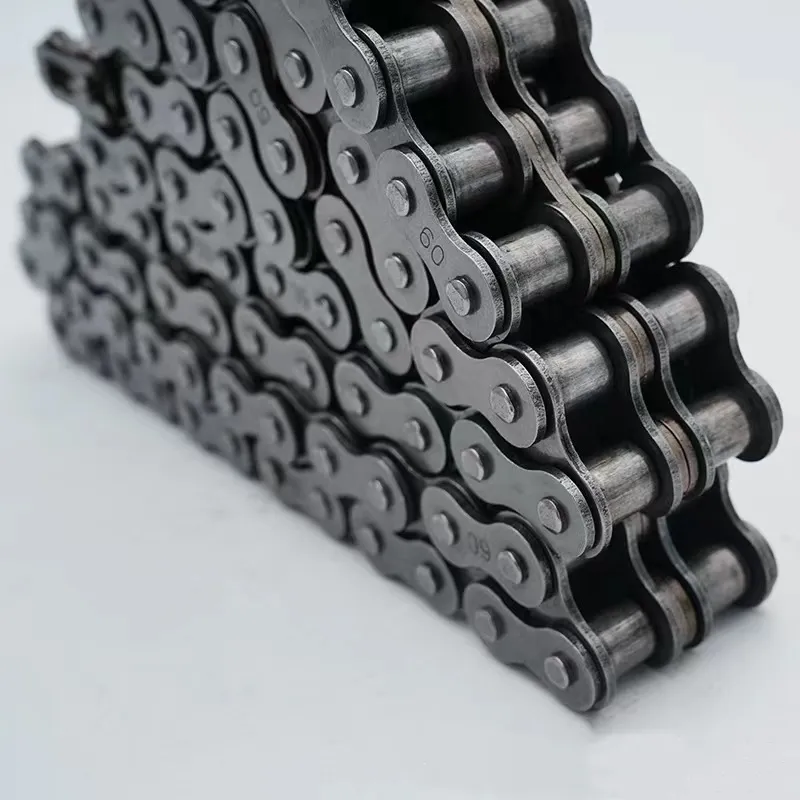
How do roller chains handle variable speed applications?
Roller chains are well-suited for variable speed applications due to their inherent design characteristics. Here’s a detailed answer to the question:
1. Speed Range: Roller chains can accommodate a wide range of speeds, making them suitable for variable speed applications. The speed of the driven sprocket can be adjusted, and the chain will adapt to the changing speed requirements.
2. Smooth Power Transmission: Roller chains provide smooth and consistent power transmission even at varying speeds. The engagement between the chain and the sprockets remains constant, ensuring reliable power transfer without slippage or loss of efficiency.
3. Tension Adjustment: In variable speed applications, the tension of the roller chain may need to be adjusted to maintain optimal performance. Proper tension ensures proper engagement with the sprockets and prevents excessive wear or elongation of the chain.
4. Lubrication: Adequate lubrication is crucial for roller chains in variable speed applications. Lubrication helps reduce friction, wear, and heat generation, ensuring smooth operation and extending the chain’s lifespan. Depending on the speed range and operating conditions, the appropriate lubrication method and frequency should be determined.
5. Chain Selection: Selecting the right type and size of roller chain is important for variable speed applications. Different chain designs and materials may have specific speed limitations or performance characteristics. Consulting the manufacturer’s specifications and recommendations can help ensure the chain’s compatibility with the required speed range.
6. System Design Considerations: When designing variable speed applications with roller chains, factors such as sprocket sizes, drive ratios, and load requirements should be carefully considered. Proper sizing and alignment of the sprockets, as well as selecting the appropriate chain pitch, can contribute to the smooth operation and longevity of the system.
It’s important to note that proper maintenance, including regular inspection, lubrication, and tension adjustment, is essential for roller chains in variable speed applications. Monitoring the chain’s condition and addressing any signs of wear or damage promptly will help ensure safe and reliable operation.
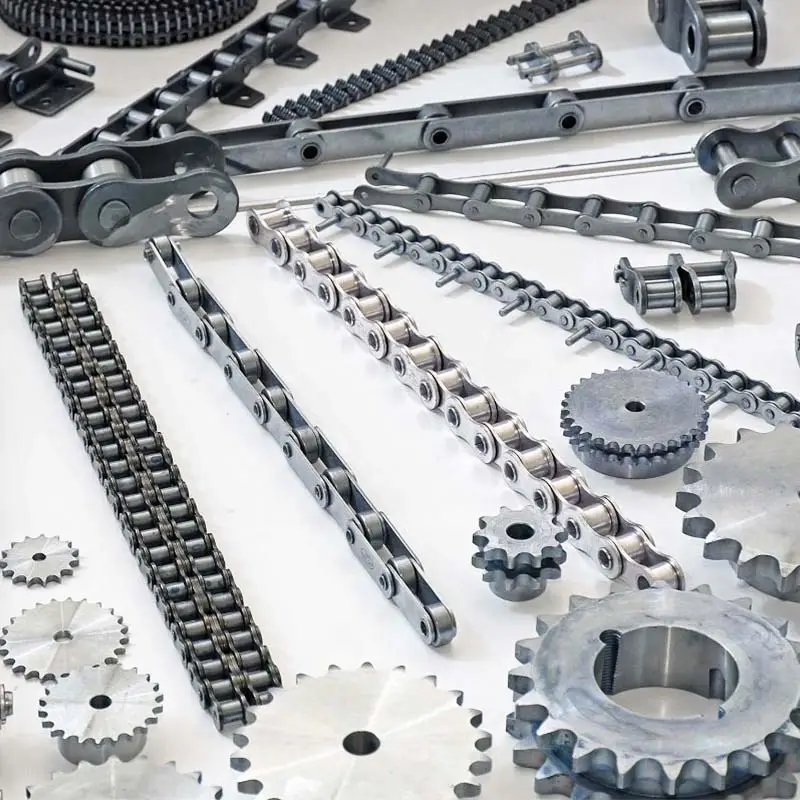
What are the benefits of using a roller chain in material handling systems?
Roller chains offer several benefits when used in material handling systems. Here’s a detailed answer to the question:
1. High Load Capacity: Roller chains are designed to handle heavy loads. They have the strength and durability to support the weight of materials being transported in material handling systems. The multiple contact points provided by the rollers distribute the load evenly, reducing stress concentrations and ensuring efficient load carrying.
2. Reliable Power Transmission: Roller chains provide reliable power transmission in material handling systems. They efficiently transfer power from the motor to the moving components, such as conveyors, lifts, and sorting systems. The precision engineering of roller chains ensures smooth and consistent power transfer, minimizing slippage and maximizing operational efficiency.
3. Flexibility and Versatility: Roller chains are available in various sizes, pitches, and configurations, offering flexibility in design and application. They can be easily adapted to different material handling system layouts and requirements. Roller chains can accommodate both horizontal and vertical movements, making them suitable for a wide range of material handling applications.
4. Durability and Longevity: Roller chains are known for their durability and resistance to wear. They are designed to withstand the demanding operating conditions typically encountered in material handling systems, such as high speeds, heavy loads, and exposure to dust, debris, and contaminants. Proper lubrication and maintenance can further enhance their longevity and reliability.
5. Easy Maintenance: Roller chains are relatively easy to maintain. Regular lubrication and periodic inspection can help ensure smooth operation and detect any signs of wear or damage. Chain tension can be easily adjusted to maintain optimal performance. In the event of chain wear or failure, individual chain links can be replaced, minimizing downtime and maintenance costs.
6. Cost-Effective Solution: Roller chains offer a cost-effective solution for power transmission in material handling systems. They are generally more affordable compared to alternative systems such as belts or gears. Additionally, their durability and longevity reduce the need for frequent replacements, resulting in cost savings over the system’s lifespan.
When selecting a roller chain for a material handling system, factors such as load capacity, speed, environmental conditions, and specific application requirements should be considered. Regular maintenance and inspection are essential to ensure optimal performance and to identify any potential issues that may require attention.
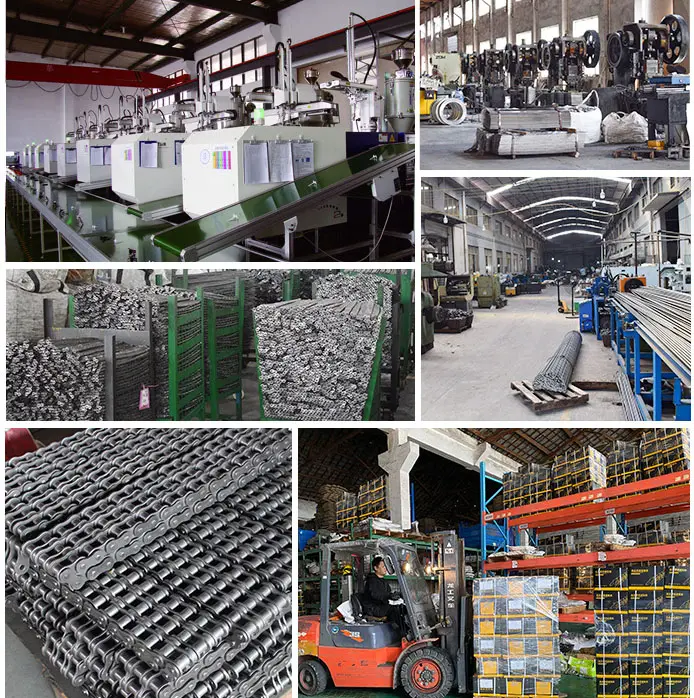
What safety precautions should be taken when working with roller chains?
Working with roller chains requires following specific safety precautions to ensure the well-being of operators and prevent accidents. Here is a detailed answer to the question:
1. Personal protective equipment (PPE): Operators should wear appropriate PPE, including safety goggles, gloves, and protective clothing, to protect themselves from potential hazards such as flying debris, oil splashes, or pinch points.
2. Training and knowledge: Operators should receive proper training on the safe operation and maintenance of roller chains. They should be familiar with the equipment’s components, functions, and potential hazards associated with chain handling, tensioning, and lubrication.
3. Lockout/tagout procedures: Before performing any maintenance or repair work on machinery equipped with roller chains, proper lockout/tagout procedures should be followed to isolate and de-energize the equipment. This ensures that unexpected startup or movement of the chain does not occur, reducing the risk of accidents.
4. Inspection and maintenance: Regular inspection and maintenance of roller chains are essential to identify any signs of wear, damage, or misalignment. Operators should follow the manufacturer’s guidelines for inspection intervals and perform necessary maintenance tasks, such as lubrication, tension adjustment, and sprocket alignment, to keep the chain in optimal condition.
5. Proper tensioning: Maintaining the correct tension in the roller chain is crucial for its safe and efficient operation. Overly tight or loose chains can lead to excessive stress, premature wear, and potential chain failure. Operators should adhere to the recommended tensioning guidelines provided by the manufacturer.
6. Guarding and barriers: Installing appropriate guarding and barriers around roller chain assemblies can help prevent accidental contact with moving parts. This includes the use of chain guards, covers, or enclosures to minimize the risk of entanglement or injury.
7. Cleanliness and housekeeping: Keeping the work area clean and free from debris, oil spills, or other potential hazards is important to maintain a safe working environment. Regular cleaning of the roller chain and surrounding equipment helps prevent contamination, improves performance, and reduces the risk of slips and falls.
8. Risk assessment: Before working with roller chains, it is essential to conduct a thorough risk assessment to identify potential hazards and implement appropriate control measures. This includes evaluating factors such as load capacity, speed, environmental conditions, and specific requirements for the application.
By following these safety precautions, operators can minimize the risk of accidents and ensure the safe operation of machinery equipped with roller chains.


editor by CX 2024-02-08