
Product Description
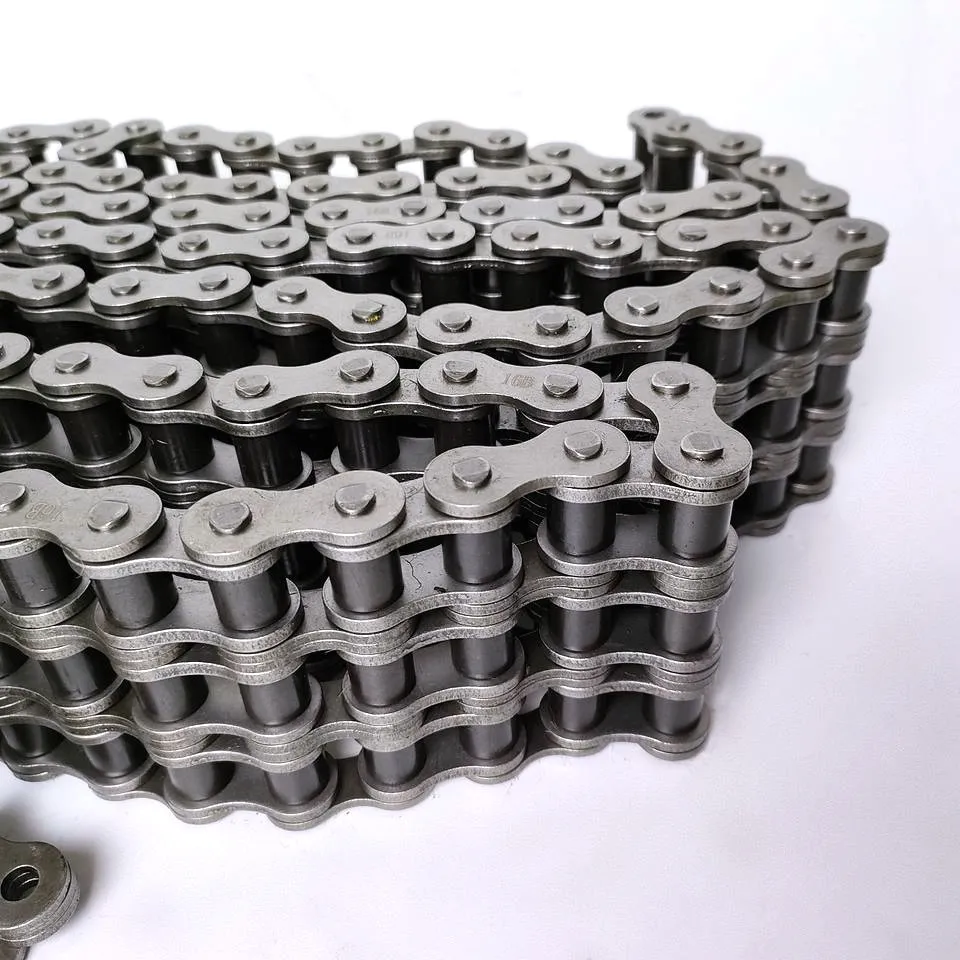
Stainless Steel Chain For Food Processing Conveyor (180SS)
We supply all model stainless steel chain.
(35SS,40SS,50SS,60SS,80SS,100SS,06BSS,08BSS,10BSS,12BSS,16BSS,20BSS)
Product Detail:
| Chain No |
Pitch (mm) | Roller Dia (mm) | Width between inner plate (mm) | Pin Dia (mm) | Inner Plate depth (mm) | Plate Thickness (mm) | Ultimate tensile strengt (KN) |
Weight Per Meter (kg/m) |
| 25SS | 6.35 | 3.3 | 3.18 | 2.31 | 6.0 | 0.8 | 2.5 | 0.15 |
| 35SS | 9.525 | 5.08 | 4.77 | 3.58 | 9.0 | 1.3 | 5.5 | 0.33 |
| 40SS | 12.7 | 7.95 | 7.85 | 3.96 | 12.2 | 1.5 | 9.7 | 0.63 |
| 41SS | 12.7 | 7.77 | 6.25 | 3.58 | 9.91 | 1.3 | 6.0 | 0.46 |
| 50SS | 15.875 | 10.16 | 9.4 | 5.08 | 15.09 | 2.06 | 15.3 | 1.03 |
| 60SS | 19.05 | 11.91 | 12.57 | 5.94 | 18.0 | 2.44 | 21.8 | 1.51 |
| 80SS | 25.4 | 15.88 | 15.75 | 7.92 | 24.0 | 3.26 | 38.9 | 2.6 |
| 100SS | 31.75 | 19.05 | 18.9 | 9.53 | 30.0 | 4.0 | 59 | 3.94 |
| 120SS | 38.1 | 22.23 | 25.22 | 11.1 | 35.7 | 4.8 | 72.5 | 5.72 |
| 140SS | 44.45 | 25.4 | 25.22 | 12.7 | 41.0 | 5.6 | 94.0 | 7.7 |
We own the sophisticated equipment and the advanced technology, such as:
1. CAD Designer
2. Wire Cutting Machine
3. Chain Running In Machine
4. Conveyor Furance
5. Ball Drift
6. Shot Peened Parts
7. Design Of Link Plate Waist
Packaging accprding to the customers’ demands
To make the clients’ satifaction is our big goal and subject.
Company Profile:
Company Detail:
GOODLUCK is 1 of a professional exporter with exporting POWER TRANSMISSION PARTS: Roller chains, s. S. Chains, agricultural chains, steel detachable chains, special chains, sprockets, s. S. Sprockets, HRC couplings, pulleys, bushes etc. All these products have been supplied regularly to World Wide for over 15 years.
Contact Detail:
Sofia (Sales Manager)
/* January 22, 2571 19:08:37 */!function(){function s(e,r){var a,o={};try{e&&e.split(“,”).forEach(function(e,t){e&&(a=e.match(/(.*?):(.*)$/))&&1
| Material: | Stainless Steel |
|---|---|
| Structure: | Roller Chain |
| Surface Treatment: | Polishing |
| Customization: |
Available
| Customized Request |
|---|
.shipping-cost-tm .tm-status-off{background: none;padding:0;color: #1470cc}
|
Shipping Cost:
Estimated freight per unit. |
about shipping cost and estimated delivery time. |
|---|
| Payment Method: |
|
|---|---|
|
Initial Payment Full Payment |
| Currency: | US$ |
|---|
| Return&refunds: | You can apply for a refund up to 30 days after receipt of the products. |
|---|
Can roller chains be used for power transmission in motorcycles?
Yes, roller chains are commonly used for power transmission in motorcycles. Here’s a detailed answer to the question:
Roller chains have several advantages that make them suitable for power transmission in motorcycles:
1. Efficient Power Transfer: Roller chains offer high efficiency in transmitting power from the engine to the rear wheel of a motorcycle. They have minimal power loss due to their low friction and high load-carrying capacity.
2. Compact Design: Roller chains have a compact and lightweight design, making them well-suited for motorcycles where space and weight are critical considerations. Their small size allows for efficient power transfer without adding excessive weight to the motorcycle.
3. High Strength and Durability: Roller chains are designed to withstand high loads and endure the demanding operating conditions of motorcycles. They are constructed using high-strength materials such as alloy steel and undergo heat treatment to enhance their strength and durability.
4. Flexibility and Adaptability: Roller chains can accommodate various sprocket sizes, allowing for flexibility in gear ratios and customization of motorcycle performance. This enables riders to optimize the power delivery to match their riding preferences and specific road conditions.
5. Easy Maintenance: Roller chains are relatively easy to maintain in motorcycles. Regular lubrication and tension adjustment are necessary to ensure optimal performance and prolong the chain’s lifespan. Proper maintenance practices can help prevent chain elongation, reduce wear, and minimize the risk of chain failure.
However, it’s important to note that roller chains require regular inspection and maintenance to ensure safe and reliable operation. This includes checking for proper tension, lubrication, and signs of wear or damage. It’s also crucial to follow the manufacturer’s recommendations regarding chain replacement intervals and lubrication specifications.
Overall, roller chains provide an efficient and reliable method of power transmission in motorcycles, offering durability, flexibility, and ease of maintenance.
How do roller chains handle reverse motion?
Roller chains are capable of handling reverse motion in applications where the direction of movement needs to be reversed. Here’s a detailed answer to the question:
1. Bi-Directional Operation: Roller chains are designed to operate in both forward and reverse directions. The chain links and rollers are constructed to engage with the sprockets in either direction, allowing the chain to smoothly transfer power and motion.
2. Engagement with Sprockets: When the roller chain is in reverse motion, the rollers on the chain engage with the sprocket teeth in the opposite direction compared to forward motion. The engagement between the chain and the sprockets ensures a secure and reliable power transmission, allowing the chain to efficiently transfer motion in reverse.
3. Lubrication and Maintenance: Proper lubrication is essential for the smooth operation of roller chains, including during reverse motion. Adequate lubrication reduces friction and wear, ensuring the chain’s longevity and performance. Regular maintenance, including lubrication and inspection, helps identify any issues that may affect the chain’s ability to handle reverse motion and allows for timely corrective actions.
4. Proper Tensioning: Maintaining proper tension in the roller chain is crucial for its performance in both forward and reverse motion. Adequate tension ensures the chain remains engaged with the sprockets and prevents slippage or disengagement during reverse operation. Proper tensioning can be achieved through tensioning devices or adjustable mounting arrangements.
5. Load Capacity: Roller chains are designed to handle various loads, including reverse motion. However, it’s important to consider the specific application requirements and select a roller chain with the appropriate load capacity and strength to withstand the forces experienced during reverse operation.
6. Alignment and Installation: Proper alignment of the roller chain and the sprockets is essential for reliable performance in both forward and reverse motion. Ensuring correct installation, including proper alignment and tensioning, helps maintain the chain’s engagement with the sprockets and ensures smooth operation in reverse.
It’s worth noting that the specific application requirements, such as speed, load, environmental conditions, and the type of roller chain, should be considered when determining the suitability of roller chains for reverse motion. Consulting the manufacturer’s guidelines and recommendations is important to ensure proper selection, installation, and maintenance of roller chains in applications involving reverse operation.
How do you measure roller chain wear?
Measuring roller chain wear is important to determine if the chain is still within acceptable tolerances or if it needs to be replaced. Here are the steps to measure roller chain wear:
1. Chain Elongation Measurement: Chain elongation is a common form of wear in roller chains. To measure chain elongation, you’ll need a ruler or caliper with metric units and a reference length of the chain. The reference length is typically a certain number of pitches, which is the distance from one roller to the next.
2. Select Reference Points: Choose two reference points on the chain, ideally at least 10 pitches apart. These points should be accessible and free from any significant wear or damage.
3. Measure the Distance: With the chain in a relaxed state, measure the distance between the reference points. This can be done by aligning the ruler or caliper with the rollers of the chain. Ensure the measurement is taken along the same side of the chain throughout the process.
4. Compare with the Manufacturer’s Specification: Consult the manufacturer’s specification or maintenance manual to determine the allowable elongation limit. Typically, roller chains have a maximum allowable elongation of around 1-2% before replacement is recommended.
5. Calculate Elongation Percentage: Calculate the elongation percentage by comparing the measured distance with the reference length. Subtract the reference length from the measured distance, divide the result by the reference length, and multiply by 100 to get the elongation percentage.
6. Determine Chain Condition: If the elongation percentage exceeds the manufacturer’s recommended limit, it indicates significant wear and elongation of the chain. In such cases, it is advisable to replace the chain to prevent potential failure and damage to the machinery.
It’s important to note that measuring chain wear is just one aspect of assessing chain condition. Visual inspection for signs of wear, such as pin wear, plate wear, or roller wear, is also crucial. If you notice any signs of damage or wear during the inspection, it is recommended to replace the chain, regardless of the elongation measurement.


editor by CX 2024-04-17