
Product Description
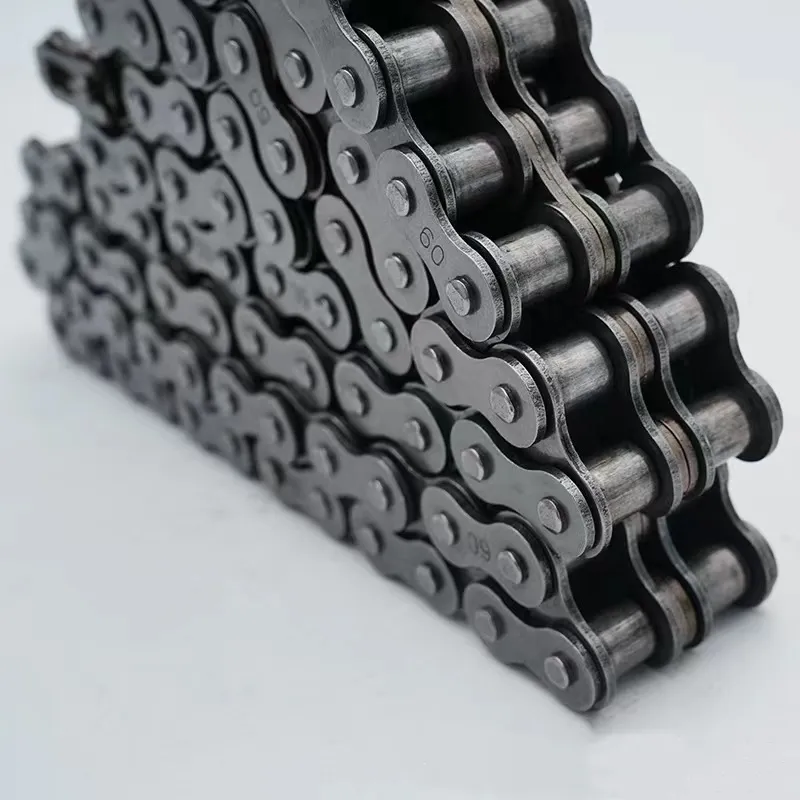
A, B series roller chain
SPECIFICATION:
1)A series chains:
A. Simplex: 25-1~240-1
B. Duplex: 25-2~240-2
C. Triplex: 25-3~240-3
D. Quadruplex: 40-4~240-4
E. Quintuple: 40-5~240-5
F. Sextuple: 40-6~240-6
G. Octuple: 40-8~240-8
2)B series chains:
A. Simplex: 04B-1~48B-1
B. Duplex: 04B-2~48B-2
C. Triplex: 06B-3~48B-3
D. Quadruplex: 08B-4~48B-4
E. Quintuple: 08B-5~48B-5
F. Sextuple: 08B-6~48B-6
G. Octuple: 08B-8~48B-8
3)Colors available: Natural, yellow, blue, black
4)Materiials: Carbon steel, stainless steel
| Usage: | Transmission Chain |
|---|---|
| Material: | Alloy |
| Surface Treatment: | Polishing |
| Feature: | Heat Resistant |
| Chain Size: | 1/2"*11/128" |
| Structure: | Roller Chain |
| Samples: |
US$ 1/Meter
1 Meter(Min.Order) | |
|---|
| Customization: |
Available
| Customized Request |
|---|
What are the factors to consider when selecting a roller chain for an application?
Choosing the right roller chain for an application involves considering several important factors. Here’s a detailed answer to the question:
1. Load Capacity: The load capacity of the roller chain should match or exceed the maximum anticipated load in the application. Consider the weight and type of the load, as well as any shock loads or dynamic forces that may be present.
2. Speed and RPM: Determine the required speed and RPM (revolutions per minute) of the roller chain. High-speed applications may require special high-speed chains with improved heat dissipation and reduced centrifugal forces.
3. Environment: Assess the operating environment of the application. Consider factors such as temperature, humidity, dust, dirt, chemicals, and exposure to corrosive substances. Choose a roller chain with appropriate corrosion resistance, sealing, lubrication, or protective coatings based on the specific environmental conditions.
4. Length and Pitch: Determine the required length and pitch of the roller chain based on the distance between the sprockets and the desired positioning of the driven and driving components.
5. Maintenance Requirements: Consider the desired maintenance level for the application. Some roller chains may require regular lubrication, while others offer maintenance-free or self-lubricating options. Assess the availability of maintenance resources and the impact of downtime on the overall operation.
6. Compatibility: Ensure compatibility between the roller chain and the sprockets used in the application. The roller chain and sprockets should have matching pitch, tooth profile, and number of teeth to ensure proper engagement and smooth operation.
7. Certification and Standards: In certain industries, compliance with specific certifications or standards may be required. Consider whether the roller chain meets industry-specific requirements such as ISO, ANSI, or industry-specific regulations.
8. Cost and Availability: Evaluate the cost and availability of the roller chain, including factors such as initial purchase price, long-term maintenance costs, and the availability of spare parts or replacement chains.
By carefully considering these factors and consulting with experts or manufacturers, you can select the most suitable roller chain for your specific application, ensuring reliable and efficient power transmission.
How do roller chains handle abrasive environments?
Roller chains are designed to handle various operating conditions, including abrasive environments. Here’s a detailed answer to the question:
1. Material Selection: Roller chains are typically constructed using high-quality materials that offer good resistance to abrasion. Common materials used for roller chains include alloy steel, stainless steel, or specialized coatings that enhance wear resistance.
2. Surface Hardness: The components of a roller chain, such as the pins, bushings, and rollers, are heat-treated to achieve a high surface hardness. This hardness helps to resist wear caused by abrasive particles present in the environment.
3. Lubrication: Proper lubrication plays a crucial role in protecting roller chains from abrasive wear. Lubricants act as a barrier between the chain components and abrasive contaminants, reducing friction and minimizing wear. The lubricant also helps to flush away any abrasive particles that may come in contact with the chain.
4. Sealing and Protection: Roller chains can be equipped with seals or protective covers to provide an additional layer of defense against abrasive particles. These seals help to prevent contaminants from entering the chain and causing premature wear. Seals also help to retain lubrication within the chain, further enhancing its performance in abrasive environments.
5. Regular Maintenance: Regular inspection and maintenance are essential to ensure the longevity of roller chains in abrasive environments. This includes periodic cleaning to remove accumulated debris and checking for signs of wear or damage. Prompt replacement of worn components is necessary to prevent further deterioration and ensure reliable operation.
While roller chains are generally robust in abrasive environments, it’s important to consider the severity of the abrasion, as extremely abrasive conditions may require specialized chain materials or additional protective measures. Consulting with experts and selecting the appropriate chain design and materials based on the specific application requirements can help maximize the performance and lifespan of roller chains in abrasive environments.


editor by CX 2023-08-09