
Product Description
Product Description
Product Parameters
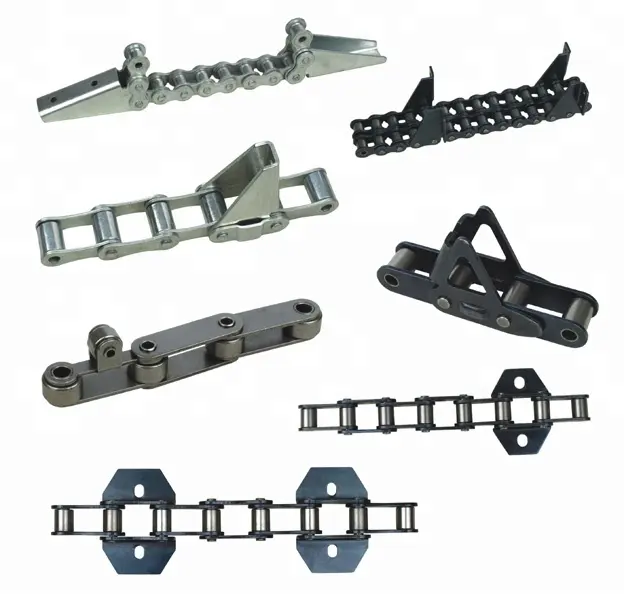
| Standard | GB, ISO, ANSI, DIN |
| Type | Standard A and standard B precision roller chain, conveyor chain; |
| special chain with accessories, welding chain, leaf chain and sprocket | |
| ANSI chain No. | 40,50,60,80,100,120,140,160,180,200,240; |
| C40,C50,C60,C80,C100,C120,C140,C160; | |
| DIN/ISO chain No. | 08A,10A,12A,16A,20A,24A,28A,32A,36A,40A,48A; |
| C08A,C10A,C12A,C16A,C20A,C24A,C28A,C32A; | |
| Application | Food processing, pharmaceutical and chemical industries, electronics, machinery; |
| household appliances, automotive manufacturing, metallurgy, sewage treatment | |
| Series | A series,B series |
More Products
Advantage
Certifications
DETAILS ABOUT CHINAMFG CHAIN
Exhibition
Workshop
Application
Packaging Details
Shipping
FAQ
1. Are you manufacturer or trade Company?
We are a factory founded in 1997 with trade team for international service.
2. What terms of payment you usually use?
T/T 30% deposit and 70% against document, Western Union, L/C at sight
3. What is your lead time for your goods?
Normally 35 days after confirmed order. 30 days could be available in low season for some items (during May to July), and 45 days during new year and hot season ( Jan to March).
4. Samples
For customers who need sample confirmation before ordering, please bear in mind that the following policy will be adopted:
1) All samples are free of charge with the maximum value not exceeding USD 100.
2) The courier cost for the first-time sample sending will be charged for by the consignee. We will send the samples with freight to be collected. So please inform your account with FedEx, UPS, DHL or TNT so that we can proceed promptly.
3) The first-time courier cost will be totally deducted from the contract value of the trial cooperation. /* January 22, 2571 19:08:37 */!function(){function s(e,r){var a,o={};try{e&&e.split(“,”).forEach(function(e,t){e&&(a=e.match(/(.*?):(.*)$/))&&1
| Usage: | Transmission Chain, Drag Chain, Conveyor Chain |
|---|---|
| Material: | Stainless steel |
| Surface Treatment: | Polishing |
| Feature: | Heat Resistant |
| Chain Size: | 1/2"*3/32" |
| Structure: | Roller Chain |
| Samples: |
US$ 0/Piece
1 Piece(Min.Order) | |
|---|
| Customization: |
Available
| Customized Request |
|---|
Can agricultural chains be used in modern drone and UAV-based farming applications?
Yes, agricultural chains can be utilized in modern drone and UAV-based farming applications, playing a crucial role in the efficiency and effectiveness of these advanced agricultural practices. Drones and UAVs (Unmanned Aerial Vehicles) have revolutionized the way farming is conducted by offering precision agriculture solutions. Here’s how agricultural chains are involved in this context:
- Payload Distribution: Agricultural chains can be employed in the design of drone payload delivery systems. These chains are responsible for controlling the accurate distribution of seeds, fertilizers, pesticides, or other agricultural inputs from the drone to the field. The chains ensure precise and controlled release, optimizing crop management and reducing waste.
- Drone Propulsion: Some drones utilize propulsion systems that may incorporate chains to efficiently transmit power from the motor to the propellers. These chains enable the conversion of motor torque into rotational motion, allowing the drone to take off, fly, and hover smoothly.
- Flight Control Mechanism: In certain drone designs, agricultural chains may be employed as part of the flight control mechanism. These chains aid in adjusting the orientation and positioning of the drone’s components, enabling stable flight and accurate navigation during aerial surveys and data collection.
- Tensioning and Balance: Agricultural chains can be utilized in ensuring proper tensioning and balance within the drone’s mechanical systems. Maintaining the right tension in the chains is critical for smooth and reliable drone operation, especially in challenging weather conditions or when carrying heavy loads.
- Automation and Precision: Drones equipped with agricultural chains and related systems can be integrated into precision agriculture practices. The chains contribute to the accuracy and repeatability of tasks, such as planting, crop monitoring, and crop spraying, resulting in optimized resource utilization and higher yields.
The use of agricultural chains in modern drone and UAV-based farming applications exemplifies the synergy between traditional agricultural practices and cutting-edge technology. These chains enable drones to perform intricate tasks with precision, revolutionizing farming methods and providing farmers with valuable insights for better decision-making and sustainable crop management.
How do agricultural chains contribute to the precision of farming operations?
Agricultural chains play a crucial role in ensuring the precision and efficiency of various farming operations. Here are some ways in which they contribute to precision:
- Uniform Power Transmission: Agricultural chains transfer power from the tractor’s engine to various farm implements and equipment. Their design and manufacturing quality ensure consistent power transmission, enabling precise control over the speed and performance of the equipment.
- Accurate Planting and Seeding: Precision planting is essential for optimizing crop yields. Agricultural chains are used in planting and seeding machines to ensure uniform seed spacing and depth, leading to even germination and better crop establishment.
- Precise Crop Irrigation: In irrigation systems, agricultural chains are used to control the movement of water sprinklers or drip lines. This precision allows farmers to apply water accurately to specific areas of the field, reducing water waste and optimizing crop irrigation.
- Consistent Harvesting: Agricultural chains are used in harvesting equipment such as combine harvesters to ensure a smooth and consistent flow of harvested crops into the machinery. This contributes to efficient harvesting and minimizes losses.
- Efficient Material Handling: In material handling operations on the farm, such as loading and unloading produce, agricultural chains are used in conveyor systems. They facilitate the precise movement of crops or other materials, streamlining the handling process.
- Precision in Livestock Feeding: In some cases, agricultural chains are used in livestock feeding systems to deliver feed accurately to animals, ensuring their nutritional needs are met.
Overall, agricultural chains’ reliable and precise performance contributes to the optimization of farming operations, leading to increased productivity, reduced wastage, and better crop or livestock management.
What are the maintenance requirements for agricultural chains?
Maintaining agricultural chains is essential to ensure their optimal performance and longevity. Here are the key maintenance requirements:
- Lubrication: Regularly lubricate the chain to reduce friction and wear. Use a suitable lubricant to protect against rust and corrosion, especially in outdoor agricultural environments.
- Inspection: Routinely inspect the chain for signs of wear, damage, or elongation. Look for loose pins, damaged plates, or any irregularities that may affect performance.
- Tension Adjustment: Check the chain’s tension and adjust it as needed. Proper tension ensures the chain functions smoothly and prevents premature wear.
- Cleaning: Keep the chain clean by removing dirt, debris, and crop residues. Regular cleaning prevents contaminants from affecting the chain’s operation and extends its life.
- Replacement of Worn Parts: If any components, such as pins, bushings, or attachments, are significantly worn or damaged, replace them promptly to maintain the chain’s integrity.
- Environmental Considerations: In particularly harsh agricultural environments, consider using chains with appropriate coatings or materials to withstand chemical exposure and adverse weather conditions.
- Proper Storage: When not in use, store the chains in a dry and clean environment to prevent rust and damage.
Regular maintenance not only ensures the agricultural chains’ reliability but also helps prevent costly downtime and potential equipment damage. Following manufacturer guidelines and best practices is crucial for keeping agricultural chains in top condition throughout their service life.


editor by CX 2024-03-26