
Product Description
|
Product |
Standard Double Pitch Roller chain |
||
|
Material |
40Mn steel,304 stainless steel, 316 stainless steel and 201 stainless steel. |
||
|
Types |
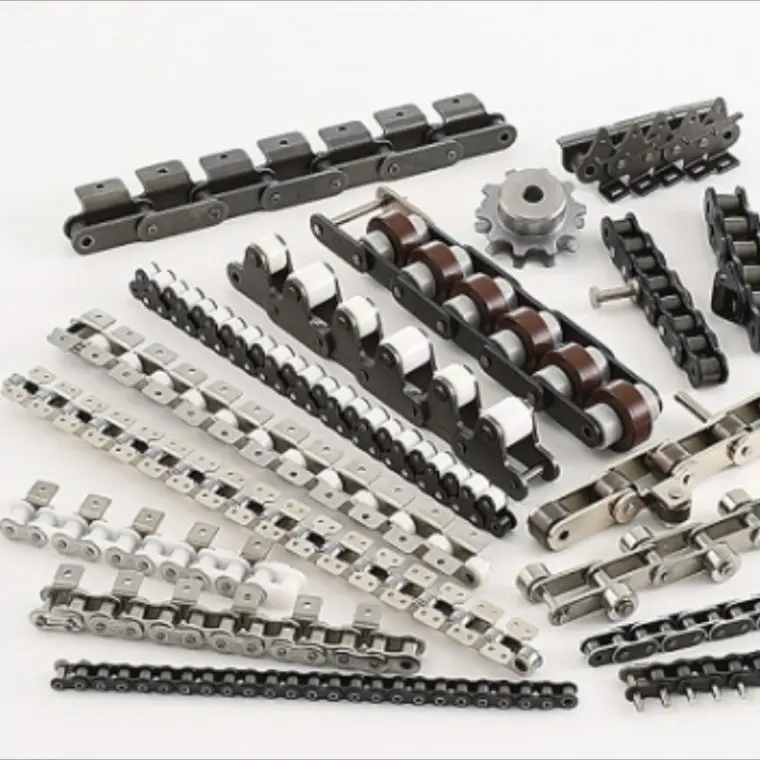
Standard chains and special chains, such as A or B series chains, roller chains, driving chains, conveyor chains, hoisting chains, agricultural chains, sprockets, gears, wheels and so on. |
||
|
Series |
A series(12.7-50.8mm pitches),B series (9.525-50.8mm pitches)and the heavy series. |
||
|
Short pitch precision roller chain |
Simplex Roller Chains&Bushing Chains: 04C-1,06C-1,085-1,08A-1,10A-1,12A-1,16A-1,20A-1,24A-1,28A-1,32A-1,36A-1,40A-1,48A-1 04C-2,06C-2,085-2,08A-2,10A-2,12A-2,16A-2,20A-2,24A-2,28A-2,32A-2,36A-2,40A-2,48A-2 04C-3,06C-2,085-3,08A-3,10A-3,12A-3,16A-3,20A-3,24A-3,28A-3,32A-3,36A-3,40A-3,48A-3 |
||
|
Chain link type |
Standard links (without attachment) and non-standard links (with attachment).
A1: One-side,one hole cranked attachments. |
||
|
Our Products Advantage |
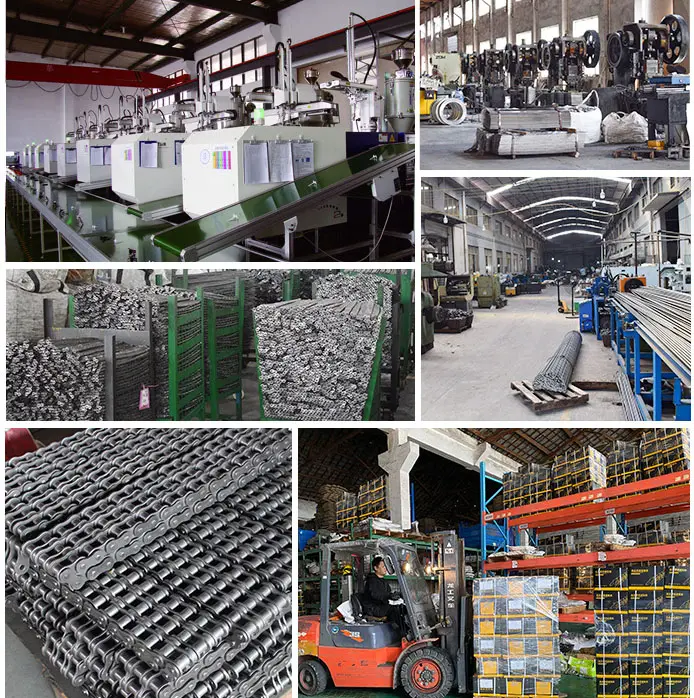
1. Every step from production order to the packing process has a strict quality inspection. |
||
1.Fast delivery: Standard products can be delivered in as fast as 20 days
2.Good service: timely reply, prompt quotation, responsible for the product
3.High cost performance: can maintain price stability for a certain period of time, bringing greater profits to customers
4.Good quality: production and testing have corresponding supervision to ensure product quality and get high praise from customers
5.OEM service: products can be customized according to drawings and requirements
We are responsible for the ordered products. We are very confident in the products we produce. Of course, if you have any problems after receiving the goods, you can contact us directly. We will confirm and negotiate in time to solve your difficulties.
| Standard or Nonstandard: | Standard |
|---|---|
| Application: | Textile Machinery, Garment Machinery, Conveyer Equipment, Packaging Machinery, Food Machinery, Mining Equipment, Agricultural Machinery |
| Surface Treatment: | Oil Blooming |
| Structure: | Roller Chain |
| Material: | Alloy |
| Type: | Double Pitch Chain |
| Samples: |
US$ 35/kg
1 kg(Min.Order) | |
|---|
| Customization: |
Available
| Customized Request |
|---|
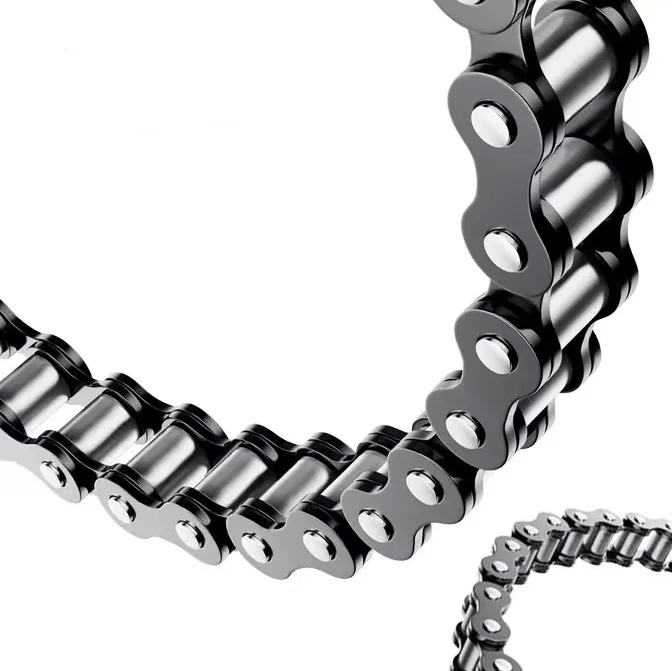
Are roller chains suitable for high-speed applications?
Roller chains are commonly used in a wide range of applications, including high-speed applications. Here’s a detailed answer to the question:
1. Robust Design: Roller chains are designed to withstand high-speed operation. They are constructed using high-quality materials and undergo precision manufacturing processes to ensure strength, durability, and reliability. The design includes features such as hardened pins, solid rollers, and precision bushings, which contribute to their ability to handle high speeds.
2. Efficient Power Transmission: Roller chains provide efficient power transmission at high speeds. The smooth engagement between the chain and the sprockets allows for minimal energy loss, ensuring effective transfer of power from the driving sprocket to the driven sprocket. This is particularly important in high-speed applications where efficiency is crucial.
3. Lubrication and Heat Dissipation: Proper lubrication is essential for the smooth operation of roller chains at high speeds. Lubrication reduces friction and heat generation, which can occur during high-speed operation. The lubricant helps to minimize wear, reduce noise, and dissipate heat, ensuring the chain operates within its optimal temperature range.
4. Dynamic Balance: Roller chains are designed to maintain dynamic balance during high-speed rotation. The symmetrical design and uniform weight distribution of the chain links and rollers help minimize vibration and reduce the risk of chain jump or derailment. This promotes stable and reliable performance, even at high speeds.
It is important to select the appropriate type and size of roller chain for a specific high-speed application, considering factors such as the required load capacity, speed, environmental conditions, and lubrication requirements. Regular maintenance, including proper lubrication, tension adjustment, and inspection of the chain and sprockets, is also crucial to ensure safe and reliable operation at high speeds.
How do roller chains handle backstop or anti-reverse motion?
Roller chains are capable of handling backstop or anti-reverse motion through the use of specific chain attachments or additional components. Here’s a detailed answer to the question:
Backstop or anti-reverse motion is the ability of a system to prevent or control the reverse movement of a load. In applications where roller chains are required to handle backstop or anti-reverse motion, the following methods can be employed:
1. One-Way Clutch: A one-way clutch mechanism can be integrated into the system to allow the roller chain to transmit power in one direction while preventing reverse movement. This mechanism typically consists of a set of sprags or rollers that engage with the sprocket teeth in one direction and disengage in the reverse direction.
2. Ratchet and Pawl System: Another approach is the use of a ratchet and pawl system, where the roller chain is connected to a ratchet wheel with pawls that engage with the teeth of the wheel in one direction, allowing power transmission, and prevent reverse movement when the load tries to rotate in the opposite direction.
3. Overrunning Clutch: An overrunning clutch, also known as a freewheel, can be employed to allow the roller chain to transmit power in one direction and disengage in the reverse direction. This allows for smooth operation in applications where backstop or anti-reverse motion is required.
These mechanisms effectively enable the roller chain to handle backstop or anti-reverse motion by allowing power transmission in one direction and preventing reverse movement. The specific mechanism used depends on the application requirements and the desired level of control over the motion.
It’s important to consult the manufacturer’s guidelines and specifications when implementing backstop or anti-reverse motion in roller chain applications to ensure proper selection and installation of the appropriate mechanisms.
What are the different types of roller chains available?
Roller chains come in various types and configurations to suit different applications and requirements. Here’s a detailed answer to the question:
1. Standard Roller Chain: This is the most common type of roller chain and is widely used in general-purpose applications. It consists of inner and outer plates, rollers, and pins.
2. Double Pitch Roller Chain: Double pitch roller chains have twice the pitch length of standard roller chains. They are commonly used in applications where slower speeds and lighter loads are present, such as conveyor systems.
3. Heavy-Duty Roller Chain: Heavy-duty roller chains are designed to withstand higher loads and more demanding operating conditions. They feature thicker plates, larger rollers, and stronger pins, offering increased strength and durability.
4. Stainless Steel Roller Chain: Stainless steel roller chains are made from corrosion-resistant stainless steel material. They are suitable for applications where resistance to moisture, chemicals, and harsh environments is required, such as food processing, pharmaceutical, and marine industries.
5. Nickel-Plated Roller Chain: Nickel-plated roller chains have a layer of nickel plating on the outer plates, providing additional corrosion resistance. They are often used in applications where protection against rust and wear is essential.
6. O-Ring Roller Chain: O-ring roller chains have O-ring seals between the outer plates and rollers. The O-rings help retain lubrication and prevent contamination, resulting in reduced maintenance requirements and extended chain life.
7. Lube-Free Roller Chain: Lube-free roller chains incorporate self-lubricating bushings or rollers that eliminate the need for external lubrication. They are suitable for applications where maintenance-free operation and clean environments are required.
8. Attachment Roller Chain: Attachment roller chains have special attachments on the outer plates, allowing for the attachment of various accessories or components. They are commonly used in applications such as conveying, lifting, or indexing systems.
9. Silent Chain: Silent chains, also known as inverted tooth chains, have tooth-shaped links that engage with the sprockets. They offer smooth and quiet operation and are often used in applications where noise reduction is critical, such as timing drives.
10. Leaf Chain: Leaf chains consist of interlocking links with large flat plates connected by pins. They are commonly used in applications requiring high strength and durability, such as forklifts and lifting devices.
Each type of roller chain has its own unique features and advantages. The selection of the appropriate type depends on factors such as load capacity, speed, environment, and specific application requirements.


editor by CX 2023-11-08