
Product Description
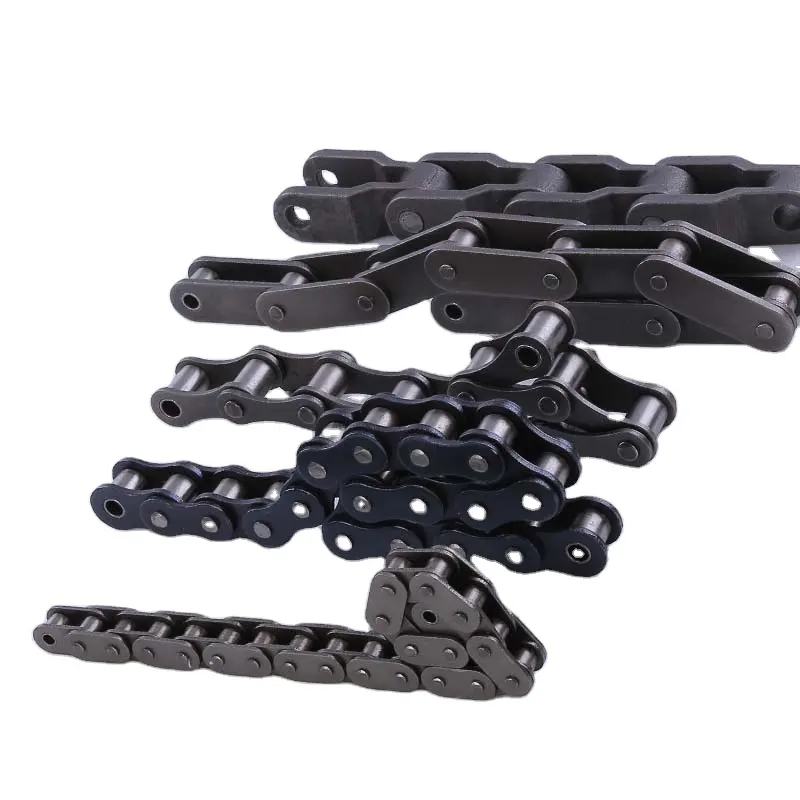
| Model NO. | 06C/08A/10A/12A/16A/20A/24A/28A/32A/40A/06B/08B/10B/12B/16B/20B/24B/28B/32B/40B-1/2/3 Heavy duty |
| Chain Model | Roller Chains |
| Structure (for Chain) | Roller Chain |
| Specification | GB/T, DIN, ANSI, ISO, BS, JIS. |
| Origin | HangZhou, ZheJiang |
| Color | Solid Color |
| Chain Color | Customized |
Our company
Wolff Chain Co. is 1 of the professional chain manufacturers in China. We focus on reseaching, manufacturing and trading of the chain drive with famous brands — “DOVON” and “DECHO”. We supply OEM services for many famous enterprises such as SUZUKI, XIHU (WEST LAKE) DIS., FAW, AGCO, JUMING as well.
Wolff mainly producing the Transmission chains,Conveyor chains,Dragging Chains,Silent chains,Leaf chains,Roller chains,Special chain and many other series of chain products. Our technicians a have improved the chains quality to the world-level. High quality material selection, powerful and precise heat-treatment technology and excellent assembly methods ensure Wolff chains meet the tough and strict requirements for machines and vehicles.
All of our products completely conform to the international standard such as ISO\DIN\ANSI\BS\JIS, etc. Wolff has been successfully certified by ISO9001 Quality Management System,SGS inspection and BV inspection. Wolff chains can be widely applied to many industries including automobile, motorcycle, forklift, wood processing machine, constructure machine, packing machine, food machine,tobacco machine and agricultural equipments. Wolff chains are popular in America,South America,Europe,Middle East, South East Asia and Africa markets.
Our workshop
Our certification
Welcome to our exhibition
FAQ
Q1. What is your terms of packing?
A: Generally, we pack our goods in single color box. If you have special request about packing, pls negotiate with us in advance, we can pack the goods as your request.
Q2. What is your terms of payment?
A: T/T 30% as deposit, and 70% before delivery. We’ll show you the photos of the products and packages
before you pay the balance. Other payments terms, pls negotiate with us in advance, we can discuss.
Q3. What is your terms of delivery?
A: EXW, FOB, CFR, CIF.
Q4. How about your delivery time?
A: Generally, it will take 25 to 30 days after receiving your advance payment. The specific delivery time depends
on the items and the quantity of your order.
Q5. Can you produce according to the samples?
A: Yes, we can produce by your samples or technical drawings. We can build the molds and fixtures.
Q6. What is your sample policy?
A: We can supply the sample if we have ready parts in stock, but the customers have to pay the sample cost and
the courier cost.We welcome sample order.
Q7. Do you test all your goods before delivery?
A: Yes, we have 100% test before delivery
Q8: How do you make our business long-term and good relationship?
1. We keep good quality and competitive price to ensure our customers benefit ;
2. We respect every customer as our friend and we sincerely do business and make friends with them,
| Standard or Nonstandard: | Standard |
|---|---|
| Application: | Textile Machinery, Garment Machinery, Conveyer Equipment, Packaging Machinery, Food Machinery, Marine, Mining Equipment |
| Surface Treatment: | Oil Blooming |
| Structure: | Roller Chain |
| Material: | Carbon Steel |
| Type: | Short Pitch Chain |
| Samples: |
US$ 0/Piece
1 Piece(Min.Order) | |
|---|
| Customization: |
Available
| Customized Request |
|---|
How do roller chains handle high torque loads?
Roller chains are designed to handle high torque loads effectively. Here’s a detailed answer to the question:
1. Robust Construction: Roller chains are constructed using high-quality materials and precise manufacturing techniques to ensure strength and durability. They are designed to withstand the forces generated by high torque loads without deformation or failure.
2. Load Distribution: Roller chains distribute the high torque load evenly across their links and pins. This even distribution helps prevent concentrated stress points and ensures that each link carries a portion of the load, reducing the risk of chain failure.
3. Fatigue Resistance: Roller chains are designed to resist fatigue caused by repeated stress cycles. They have sufficient strength and resilience to endure the high torque loads encountered during operation without experiencing premature wear or failure.
4. Proper Lubrication: Adequate lubrication is crucial for the smooth operation and longevity of roller chains under high torque loads. Lubrication reduces friction, minimizes wear, and helps dissipate heat generated by the increased forces. Proper lubrication ensures that the chain operates efficiently and extends its lifespan.
5. Tensile Strength: Roller chains are engineered to have high tensile strength, which allows them to withstand the tension created by high torque loads. The tensile strength of the chain ensures that it can handle the pulling force exerted by the rotating sprockets without elongation or failure.
6. Sprocket Selection: The choice of sprockets also plays a significant role in handling high torque loads. Sprockets should be matched appropriately with the roller chain to ensure proper engagement and efficient power transmission. Selecting sprockets with the appropriate tooth profile, material, and design helps optimize the performance and longevity of the chain under high torque conditions.
Roller chains have been extensively used in applications that require the transmission of high torque, such as heavy machinery, industrial equipment, and automotive systems. Their robust construction, load distribution capabilities, fatigue resistance, proper lubrication, high tensile strength, and compatibility with well-designed sprockets make them reliable and efficient in handling high torque loads.
Can roller chains be used for power transmission in industrial equipment?
Yes, roller chains are widely used for power transmission in various industrial equipment and machinery. Here’s a detailed answer to the question:
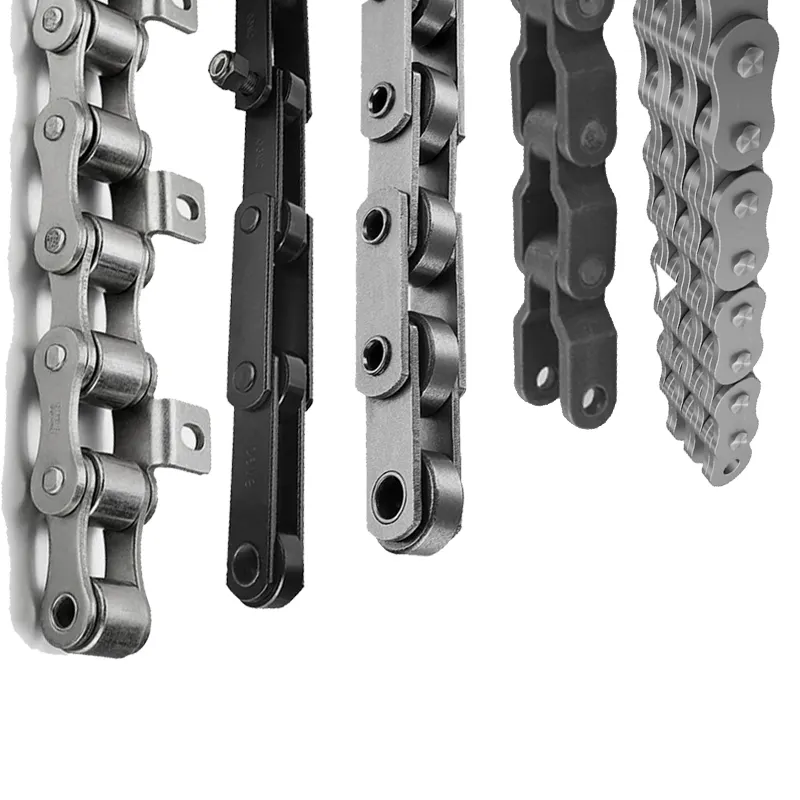
1. Versatility: Roller chains are known for their versatility and can be used in a wide range of industrial applications. They are commonly employed in machinery such as conveyors, agitators, mixers, hoists, elevators, packaging equipment, material handling systems, and many other types of industrial equipment.
2. Power Transmission: Roller chains excel in transmitting power from one rotating shaft to another. They can efficiently transfer high torque and handle heavy loads, making them suitable for demanding industrial applications where power transmission is required.
3. Load Capacity: Roller chains are designed to withstand significant loads and provide reliable power transmission. They are available in various sizes and strengths, allowing for customization based on the specific load requirements of the industrial equipment.
4. Durability: Roller chains are built to be durable and withstand harsh operating conditions typically encountered in industrial environments. They are constructed using high-quality materials and undergo heat treatment processes to enhance their strength and resistance to wear, fatigue, and elongation.
5. Efficiency: Roller chains offer high transmission efficiency due to their positive engagement with the sprockets. The rollers on the chain engage with the sprocket teeth, minimizing slippage and ensuring reliable power transfer. This results in efficient operation and optimized performance of industrial equipment.
6. Easy Maintenance: Roller chains are relatively easy to maintain, especially when compared to other power transmission systems. Proper lubrication and periodic inspection are essential to ensure smooth operation and extend the chain’s lifespan. Regular maintenance routines can be implemented to keep the chains in optimal condition and minimize downtime.
7. Cost-Effectiveness: Roller chains are generally cost-effective compared to alternative power transmission methods. They offer a balance between performance, durability, and affordability, making them a popular choice for power transmission in industrial equipment.
In summary, roller chains are well-suited for power transmission in industrial equipment due to their versatility, load capacity, durability, efficiency, ease of maintenance, and cost-effectiveness. When selecting roller chains for industrial applications, it’s important to consider factors such as load requirements, speed, environmental conditions, and compatibility with the specific equipment to ensure optimal performance and longevity.
How do you measure roller chain wear?
Measuring roller chain wear is important to determine if the chain is still within acceptable tolerances or if it needs to be replaced. Here are the steps to measure roller chain wear:
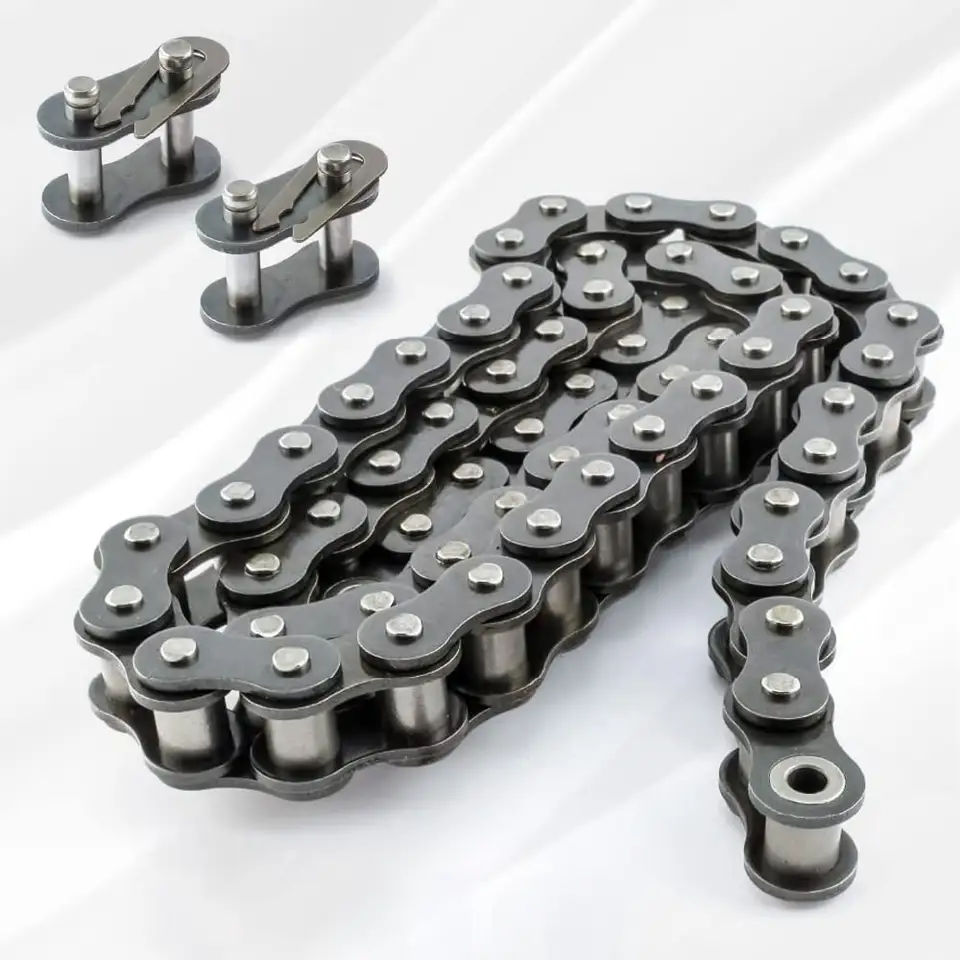
1. Chain Elongation Measurement: Chain elongation is a common form of wear in roller chains. To measure chain elongation, you’ll need a ruler or caliper with metric units and a reference length of the chain. The reference length is typically a certain number of pitches, which is the distance from one roller to the next.
2. Select Reference Points: Choose two reference points on the chain, ideally at least 10 pitches apart. These points should be accessible and free from any significant wear or damage.
3. Measure the Distance: With the chain in a relaxed state, measure the distance between the reference points. This can be done by aligning the ruler or caliper with the rollers of the chain. Ensure the measurement is taken along the same side of the chain throughout the process.
4. Compare with the Manufacturer’s Specification: Consult the manufacturer’s specification or maintenance manual to determine the allowable elongation limit. Typically, roller chains have a maximum allowable elongation of around 1-2% before replacement is recommended.
5. Calculate Elongation Percentage: Calculate the elongation percentage by comparing the measured distance with the reference length. Subtract the reference length from the measured distance, divide the result by the reference length, and multiply by 100 to get the elongation percentage.
6. Determine Chain Condition: If the elongation percentage exceeds the manufacturer’s recommended limit, it indicates significant wear and elongation of the chain. In such cases, it is advisable to replace the chain to prevent potential failure and damage to the machinery.
It’s important to note that measuring chain wear is just one aspect of assessing chain condition. Visual inspection for signs of wear, such as pin wear, plate wear, or roller wear, is also crucial. If you notice any signs of damage or wear during the inspection, it is recommended to replace the chain, regardless of the elongation measurement.


editor by CX 2023-10-23