
Product Description
TRANSMISSION ROLLER CHAIN
Feature
. Long-life duration and high strength
. Good performance of anti-rusty
. Pre-stretching and running for each roll before delivery
. All the chain parts are of complete heat-treatment and controlled within the standarded tolerance
. Can produce any nonstandarded chain according to the drawing or sample
Production Range
1) A Series Short-Pitch Transmission Precision Roller Chain
25-1R, 35-1R, 40-1R, 50-1R , 60-1R, 80-1R, 100-1R, 120-1R, 140-1R, 160-1R, 180-1R, 200-1R, 240-1R
Double stand, triple strand are available
2). B Serieis Short-Pitch Transmission Precision Roller Chain
05B-1R, 06B-1R, 08B-1R, 10B-1R, 12B-1R, 16B-1R, 20B-1R, 24B-1R, 28B-1R, 32B-1R, 40B-1R, 48B-1R
Double stand, triple stand are available.
3). Short-Pitch Heavy Roller Chain
40H, 50H, 60H, 80H, 100H, 120H, 140H, 160H, 200H
4). Motorcycle Chain
25H, 219H, 420, 420H, 428, 428H, 520, 520H, 530, 530SH, 630
OTHER SERIES STEEL CHAIN
1. Conveyor chain: C2040, C2042, C2050, C2052, C2060, C2062, C2060H, C2062H, C2080, C2082, C2080H, C2082H, C2100, C2102, C2100H, C2120H, C2160, C2162, C2160H, C2162H,
2. Hollow Pin Chain: C2040HP, C2050HP, C2042HP, C2052HP, C2060HP, C2062HP, C2080HP, C2082HP, 40HP, 50HP, 60HP, 80HP
3. Agricultural Roller Chain: S32, S42, S45, S52, S55, S62, S77, S88, C550, C620, CA550, CA557, CA620
4. Welded Steel Cranked Link Mill Chain: W78, W82, W110, W111, W124, W132
5. Leaf Chain: BL622, BL623,BL634, BL644, BL646, BL666, BL688, BL822, BL823, BL834, BL844, BL846, BL866, BLF888, BL1571, BL1034, BL1046, BL1066, BL1222, BL1244, BL1288, BL1422, BL1444, BL1488, BL1622, BL1644, BL1688, BL2571, BL2034, BL2066, BL2088
6. Drop Forged Chain: X348, X458, X678, X689
7. Chain Coupling: 4012, 4014, 4016, 5014, 5016, 5018, 6018, 6571, 6571, 8018, 8571, 8571, 10571, 12018
FAQ
Q1. Can I have a sample order?
Yes, any sample order is welcome to know the quality of our products.
Q2. What about the lead time of the sample or the final order?
2-5 days for normal sample.
20-30 days for a formal order.
Q3. How much is the minimum quantity for each item in 1 order?
Any quantity is ok to run.
Q4. Is it possible to print our logo or brand on the belt?
Yes, we can print your logo or design on the belt after receipt of your formal authorization letter of the logo or your brand.
Q5. Do you offer the guarantee for your product?
Yes, usually we offer 1 year warranty for all of our products.
| Standard or Nonstandard: | Standard |
|---|---|
| Application: | Textile Machinery, Conveyer Equipment, Motorcycle, Food Machinery, Mining Equipment, Agricultural Machinery |
| Surface Treatment: | Polishing |
| Structure: | Roller Chain |
| Material: | Carbon Steel |
| Type: | Short Pitch Chain |
| Samples: |
US$ 0/Piece
1 Piece(Min.Order) | |
|---|
| Customization: |
Available
| Customized Request |
|---|
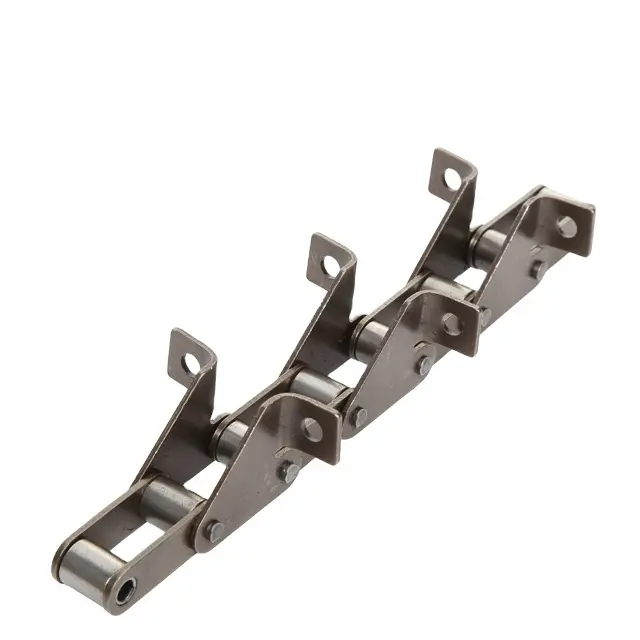
What are the factors to consider when selecting the right agricultural chain pitch?
Choosing the appropriate agricultural chain pitch is crucial to ensure optimal performance and longevity in farming equipment. Several factors should be taken into account when making this selection:
- Application Requirements: Understand the specific requirements of the agricultural application in which the chain will be used. Consider factors such as the type of equipment, load capacity, and the frequency of use.
- Power Transmission: Determine the power transmission needs of the machinery. Higher horsepower or torque requirements may call for a larger chain pitch to handle the increased load.
- Speed: Consider the operating speed of the agricultural equipment. Higher speeds may require smaller chain pitches to ensure smooth operation and reduced wear.
- Working Conditions: Evaluate the environmental conditions in which the chain will operate. Dust, dirt, moisture, and other contaminants can impact chain performance and durability.
- Load Distribution: Analyze how the load is distributed across the chain. Uniform load distribution is essential for preventing premature wear and maintaining the integrity of the chain.
- Maintenance: Factor in the maintenance requirements of the chain pitch. Smaller pitches might require more frequent lubrication and inspection, while larger pitches may offer more tolerance to contamination.
- Compatibility: Ensure that the selected chain pitch is compatible with the sprockets and other components in the agricultural machinery.
- Cost-Effectiveness: Strike a balance between the initial cost of the chain and its expected lifespan. Choosing a high-quality chain that meets the application needs can lead to cost savings in the long run.
By considering these factors, farmers and equipment operators can make an informed decision when selecting the right agricultural chain pitch. Properly matching the chain to the specific application and operational requirements will contribute to enhanced equipment performance, reduced downtime, and increased overall productivity in farming operations.
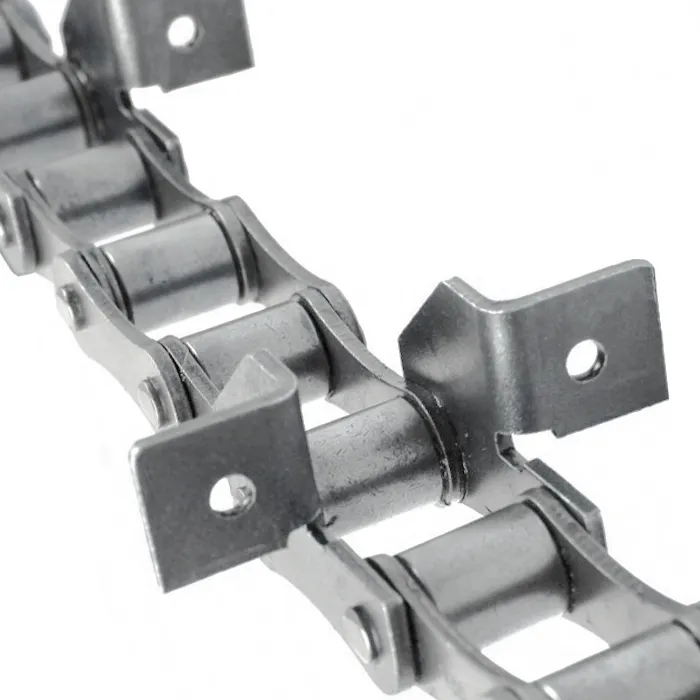
How do agricultural chains handle heavy loads and high torque requirements?
Agricultural chains are designed to handle heavy loads and high torque requirements commonly encountered in farming machinery. Here’s how they achieve this:
- High-Quality Materials: Agricultural chains are typically made from high-quality alloy steels that offer excellent tensile strength, toughness, and resistance to wear. These materials can withstand the stress and strain of heavy loads and high torque, ensuring the chain’s integrity under demanding conditions.
- Robust Design: The design of agricultural chains includes precision engineering to ensure optimal load distribution and efficient power transmission. The components are manufactured to specific dimensions, allowing them to mesh smoothly with sprockets and transmit torque effectively.
- Large Contact Areas: Agricultural chains often have large contact areas with sprocket teeth, which helps distribute the load more evenly, reducing stress concentration on individual components. This design feature enhances the chain’s ability to handle heavy loads and torque.
- Heat Treatment: Many agricultural chains undergo heat treatment processes like carburizing or induction hardening. These treatments improve the chain’s surface hardness, wear resistance, and fatigue strength, making it more capable of handling heavy loads and high torque without premature failure.
- Preloading and Lubrication: Proper preloading of the chain during assembly and regular lubrication are essential to reduce friction and wear. Adequate lubrication also helps dissipate heat generated during operation, preventing excessive wear and elongation of the chain under heavy loads.
- Regular Maintenance: Regular maintenance and inspection are vital to ensuring that agricultural chains remain in optimal condition. Periodic checks for signs of wear, proper tension, and lubrication help prevent unexpected failures and extend the chain’s service life.
In conclusion, agricultural chains are built with robust materials, precise design, and appropriate treatments to handle heavy loads and high torque requirements effectively. When used and maintained correctly, they contribute to the reliable and efficient operation of various farming equipment.
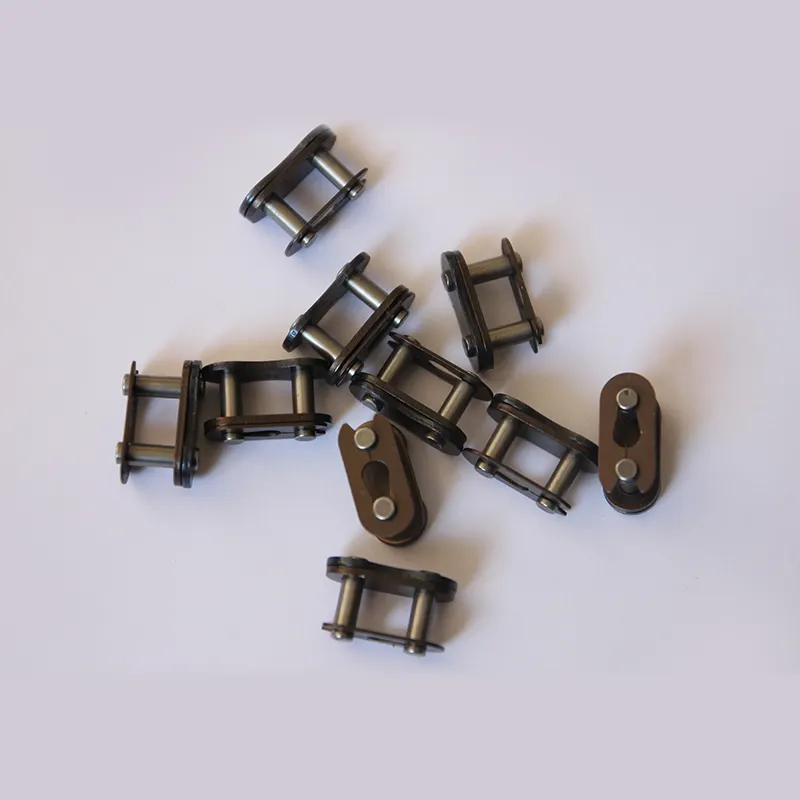
Are there specific safety considerations when working with agricultural chains?
Yes, there are specific safety considerations that should be taken into account when working with agricultural chains to ensure the well-being of operators and prevent accidents. Here are some important safety guidelines:
- **Proper Training:** Operators should receive proper training on the use and maintenance of agricultural chains. They should understand the safe operating procedures, including how to inspect chains for wear and perform routine maintenance.
- **Protective Gear:** When handling chains or operating agricultural equipment, operators should wear appropriate personal protective equipment (PPE) such as gloves and eye protection to safeguard against potential hazards.
- **Avoid Overloading:** Agricultural chains have specific load limits, and it’s crucial not to exceed them. Overloading can lead to premature wear or even chain failure, causing accidents and equipment damage.
- **Regular Inspection:** Regularly inspect the chains for signs of wear, damage, or fatigue. Replace any worn or damaged chains promptly to prevent failure during operation.
- **Lubrication:** Proper lubrication is essential to reduce friction and wear between chain components. Follow the manufacturer’s guidelines for lubrication intervals and use the recommended lubricants.
- **Environmental Considerations:** Take into account the environment in which the agricultural chains are used. Avoid exposing chains to harsh chemicals, extreme temperatures, or corrosive agents that can weaken the chains over time.
- **Safe Storage:** When not in use, store the agricultural chains properly in a clean and dry environment to prevent contamination and corrosion.
- **Caution with Moving Parts:** Exercise caution when operating equipment with moving chains, and avoid placing hands or other body parts near moving chain components.
- **Emergency Procedures:** Ensure that operators are aware of emergency procedures in case of chain failure or other equipment-related incidents.
By adhering to these safety considerations, operators can minimize the risk of accidents and ensure the safe and efficient operation of agricultural machinery.


editor by CX 2023-08-09