
Product Description
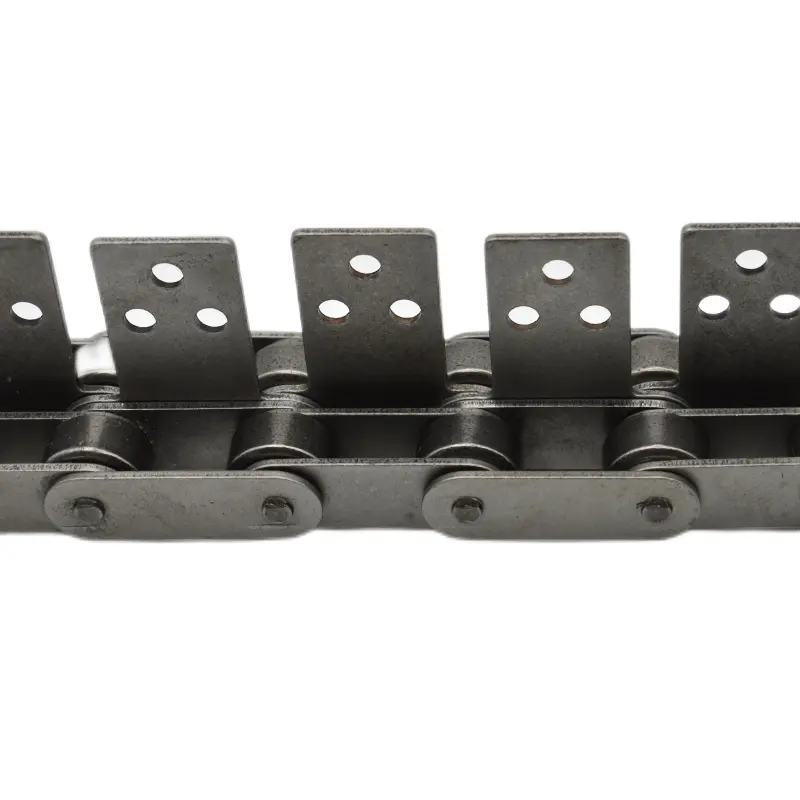
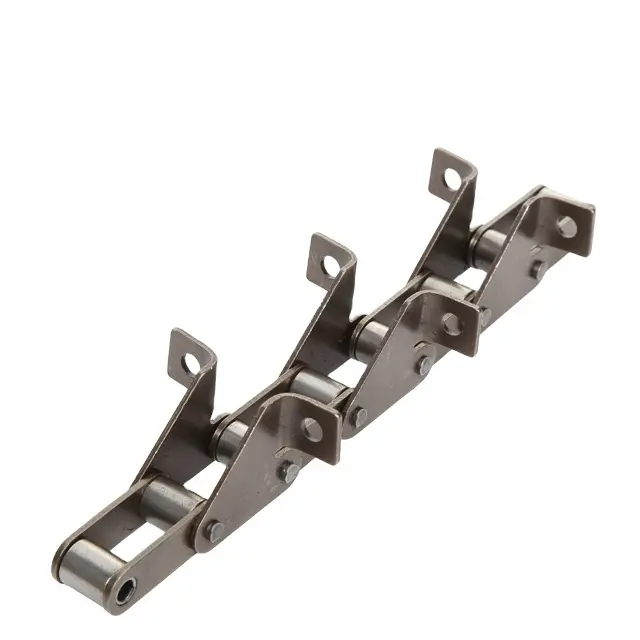
S Type S52F11SD S52F3 C45F1SD Steel Agricultural Conveyor Roller Chain With Attachment
Application A spare part of an elevator conveyor assembly for combining chain.
Destination Transporter roller chain for conveyors and elevators used used for uploading in the grain mass to further processing required to combine units. This spare part is used for replacing a worn out or damaged unit during repairs.
Properties The conveyor roller chain consists of special links with the pads, intended for fastening the working bodies (scrapers, levels, combs, etc.) that are alternating in the set sequence with links of driving roller chains.
|
Chain No. |
P |
d1 |
b1 |
C |
E |
F |
W |
d4 |
h2 |
|
mm |
mm |
mm |
mm |
mm |
mm |
mm |
mm |
mm |
|
|
S52F11SD |
38.1 |
16.00 |
17.50 |
21.0 |
23.0 |
55 |
75 |
8.3 |
20 |
|
S52F3 |
38.4 |
15.88 |
18.50 |
24.0 |
37.4 |
52 |
73 |
8.7 |
17.5 |
|
C45F1SD |
41.4 |
15.24 |
22.23 |
19.7 |
41.7 |
58 |
90 |
6.6 |
17.3 |
We offer a full and complete line of high-quality roller chain attachments and roller chain attachment assemblies right off the shelf. Our inventory of attachments ranges in quality, material, and type. We have Economy Plus, General Duty Plus, and Premier Series attachments in stock. As well as stainless steel, nickel-plated, carbon, and dacromet coated attachments all available in ANSI and Metric (ISO & DIN) standard sizes. We also keep pre-assembled chains in-stock for most standard roller chain sizes and configurations, but if we don’t have it on the shelf, we can build or assemble the attachment chain in the matter of a few days.
Contact us: We care about our valued buyers, if you have any questions, our Customer Service staffs will be very glad to help you. We try our best to reply to your emails as soon as possible, however, due to the high volume of daily incoming emails and time zone difference, we may not be able to reply your emails immediately. Please allow 24 business hours for us to respond.
Related Products
Company
Ever-power transmission group is an enterprise specializing in the production of special chains with large pitches, and is a member of the National Chain Transmission Standardization Technical Committee. We have a complete chain production line, equipment selection and process design adhere to the concept of high efficiency, energy saving and automation, we have complete testing equipment, high-quality enterprise management and professional and technical personnel.
We focus on drive chains, special chains, chain accessories , mechanical parts, etc., formed a “professional, precise, professional, innovative” special chain development and production system, mastered the core technology of chain production, proficient in steel core processing, products are widely used in sugar, paper, cement processing, Wood processing, grain processing, the company pays attention to the reputation of product quality, has passed the ISO9001:2008 quality management system certification, and obtained the qualification for import and export of self-operated and agency related products and technologies.
Our products are exported to all provinces and cities in China, and also exported to Europe, America and Southeast Asia. “Sincere cooperation, mutual benefit” is our philosophy of serving customers. We hope to strengthen cooperation with all friends and develop business together.
/* January 22, 2571 19:08:37 */!function(){function s(e,r){var a,o={};try{e&&e.split(“,”).forEach(function(e,t){e&&(a=e.match(/(.*?):(.*)$/))&&1
| Usage: | Transmission Chain, Drag Chain, Conveyor Chain, Dedicated Special Chain |
|---|---|
| Material: | Iron |
| Surface Treatment: | Oil Blooming |
| Feature: | Oil Resistant |
| Chain Size: | 1/2"*3/32" |
| Structure: | Roller Chain |
| Samples: |
US$ 9999/Piece
1 Piece(Min.Order) | |
|---|
Can agricultural chains be used in forestry and timber harvesting equipment?
Yes, agricultural chains can be used in forestry and timber harvesting equipment for specific applications. While they are primarily designed for agricultural use, their robust construction and ability to handle heavy loads make them suitable for certain tasks in the forestry industry.
In forestry and timber harvesting equipment, agricultural chains are often employed in tasks such as:
- Conveying Logs: Agricultural conveyor chains can be utilized in conveyor systems to transport logs from one location to another within a processing facility or sawmill.
- Debarking: Pintle chains or roller chains may be used in debarking equipment to remove the bark from logs before further processing.
- Material Handling: Agricultural chains with appropriate attachments can be applied in material handling equipment to lift, move, or stack timber and logs.
It’s important to note that while agricultural chains can be used in certain forestry applications, there are specialized chains explicitly designed for the forestry and logging industry, such as forestry chains and chainsaw chains. These specialized chains are tailored to handle the unique challenges posed by cutting and processing timber in the forest.
When considering the use of agricultural chains in forestry equipment, it’s crucial to assess the specific requirements of the task and ensure that the chain’s design and strength are suitable for the intended application. Regular maintenance and inspection should also be carried out to ensure safe and efficient operation.
What are the best practices for maintaining agricultural chains?
Maintaining agricultural chains is essential to ensure their longevity, reliability, and optimal performance in farming operations. Here are some best practices for maintaining agricultural chains:
- Regular Inspection: Conduct routine visual inspections of the chains to check for signs of wear, damage, or misalignment. Look for elongation, corrosion, and broken links.
- Lubrication: Proper lubrication is crucial for reducing friction and wear. Follow the manufacturer’s guidelines to apply the right type and amount of lubricant regularly.
- Tension Adjustment: Maintain the correct tension in the chains. Loose chains can lead to jumping or skipping, while overtightened chains can cause premature wear.
- Cleanliness: Keep the chains clean and free from debris, dirt, and crop residues that can cause abrasive wear and damage.
- Environmental Protection: Store agricultural equipment in a dry and covered environment when not in use to prevent rust and corrosion.
- Replacement of Worn Parts: Replace any worn-out or damaged components, such as sprockets, pins, and bushings, as they can affect chain performance.
- Proper Use: Operate agricultural machinery within recommended loads and operating conditions to avoid excessive stress on the chains.
- Training and Operator Awareness: Train equipment operators on proper chain maintenance and raise awareness of the importance of regular inspections and care.
By adhering to these best practices, farmers and agricultural equipment operators can maximize the lifespan of their agricultural chains and minimize downtime due to chain-related issues. Regular maintenance not only enhances chain performance but also contributes to the overall efficiency and productivity of farming operations.
Can agricultural chains withstand the demanding conditions of farming operations?
Yes, agricultural chains are designed and built to withstand the demanding conditions of farming operations. These chains are specifically engineered to handle the tough and challenging environments that are common in agriculture. Some of the reasons why agricultural chains can withstand these conditions include:
- High-Quality Materials: Agricultural chains are typically made from high-quality materials such as carbon steel, stainless steel, or alloy steel. These materials offer excellent strength, durability, and resistance to wear, making them suitable for heavy-duty applications.
- Robust Construction: The construction of agricultural chains involves precision engineering and heat treatment processes, which enhance their strength and toughness. This ensures that the chains can withstand the high loads and stresses encountered in farming equipment.
- Corrosion Resistance: Farming operations often involve exposure to moisture, dirt, and chemicals, which can lead to corrosion. Agricultural chains are designed with corrosion-resistant coatings or materials to protect against rust and deterioration.
- Proper Lubrication: Adequate lubrication is essential for the smooth operation and longevity of agricultural chains. Many agricultural chains come with lubrication holes or grooves to facilitate proper lubrication and reduce friction.
- Compatibility: Agricultural chains are designed to be compatible with the sprockets, gears, and other components in farming equipment, ensuring reliable performance and efficient power transmission.
- Regular Maintenance: Like any mechanical component, agricultural chains require regular maintenance to ensure optimal performance and longevity. Proper maintenance practices, including lubrication, cleaning, and inspection, can help extend the life of the chain.
Overall, agricultural chains are built to be rugged and durable, capable of withstanding the harsh conditions of farming operations. When properly selected, installed, and maintained, these chains play a crucial role in the reliable and efficient functioning of various agricultural machinery and equipment.


editor by CX 2024-04-25