
Product Description
Extended bearing pins
Short-pitch transmission precision roller and bush chains
Used industrial transmission roller chains;Industrial and agricultural machinery, including conveyors,wire- and tube-drawing machines, printing presses, cars, motorcycles, and bicycles.It consists of a series of short cylindrical rollers held together by side links.It is a simple, reliable, and efficient means of power transmission.
Quadruplex Roller Chains are widely used in Conveyors, automobiles and other industrial machines for easy operation and fast process.
| Goods | Roller chains K attachments |
| Package | we use carton or pallet; we have regular sizes and the loading capacities of them. |
| Full | New |
| Delivery detail | 2-3 weeks after receiving your advance payment. |
| Shipping method | Sea, air, express delivery. |
Extended pin: with the bearing pin extended on 1 side of the chain
Extended pin dimensions
HangZhou CZPT Jin Hao International Trade Co., Ltd.
Hoping sincerely that you can choose our company;We will serve wholeheartedly for you by our rich experience!
Glad to be of service.Please feel free to contact us anytime !!!
We 24 hours service for you!
| Standard or Nonstandard: | Standard |
|---|---|
| Application: | Textile Machinery, Garment Machinery, Conveyer Equipment, Packaging Machinery, Electric Cars, Motorcycle, Food Machinery, Marine, Mining Equipment, Agricultural Machinery, Car |
| Surface Treatment: | Oxygenation |
| Structure: | Roller Chain |
| Material: | Carbon Steel |
| Type: | Short Pitch Chain |
| Samples: |
US$ 6.87/Piece
1 Piece(Min.Order) | |
|---|
| Customization: |
Available
| Customized Request |
|---|
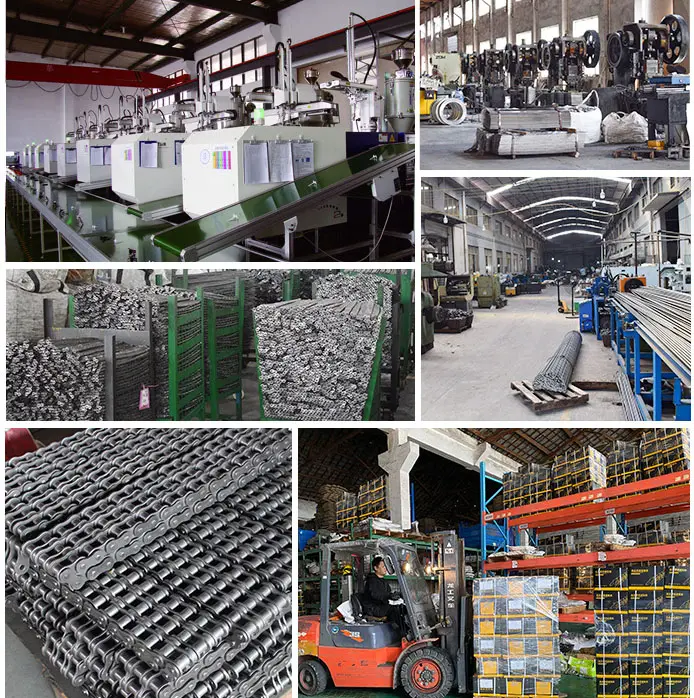
How do roller chains handle side loads?
Roller chains are designed to primarily handle axial (or in-line) loads, which are forces applied along the axis of the chain. However, they do have some capability to handle limited side loads. Here’s a detailed answer to the question:
1. Roller Design: The rollers in a roller chain are cylindrical in shape and rotate freely between the inner and outer plates. This design allows the chain to accommodate limited side loads by allowing the rollers to roll and adjust their position within the chain.
2. Bearing Surfaces: Roller chains have bearing surfaces between the pins and the bushings or rollers. These bearing surfaces help distribute the load and reduce friction, allowing the chain to handle some degree of side loads.
3. Tolerance for Misalignment: Roller chains have some tolerance for misalignment between the sprockets, which can help compensate for minor side loads. However, excessive misalignment can lead to increased wear and decreased chain life.
4. Limitations: It’s important to note that roller chains are primarily designed for transmitting power and handling axial loads. While they can tolerate some side loads, their ability to handle significant side loads is limited. Excessive side loads can cause increased wear, premature chain failure, and reduced overall performance.
To ensure the longevity and reliable performance of a roller chain, it is essential to minimize side loads as much as possible. Proper alignment of the sprockets, appropriate tensioning of the chain, and avoiding excessive side loads are important considerations when using roller chains in an application.
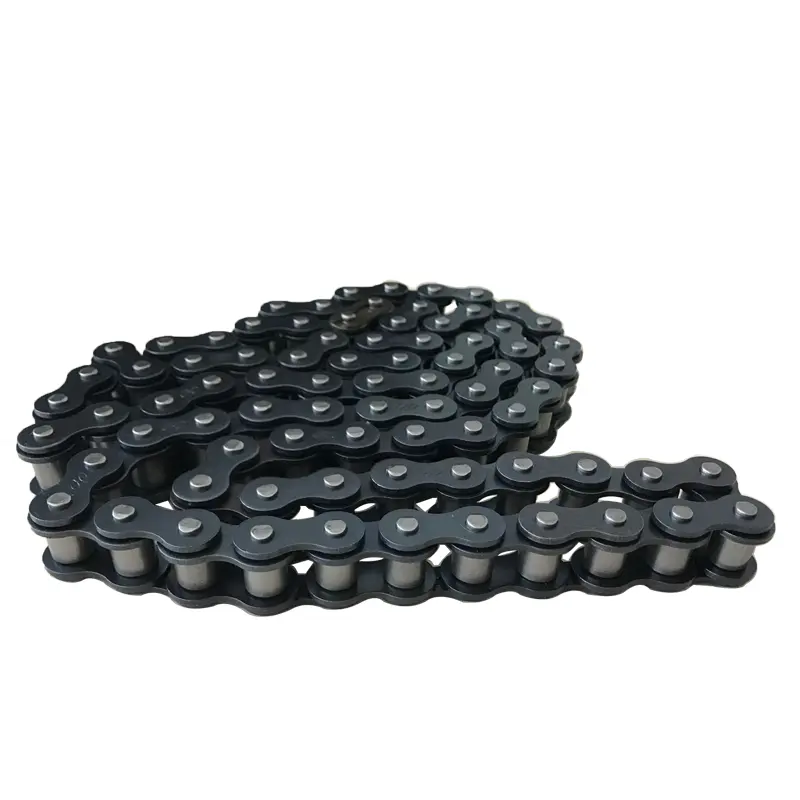
How do roller chains handle static loads?
Roller chains are primarily designed for transmitting power and handling dynamic loads, which involve motion and varying forces. However, roller chains can also handle static loads to some extent. Here’s a detailed answer to the question:
1. Load Distribution: When a roller chain is subjected to static loads, the weight or force is evenly distributed across multiple rollers and pins. This helps to distribute the load more effectively and reduces stress concentrations on individual components. The load is transferred from one roller to another through the pins, ensuring a more balanced distribution.
2. Stiffness: Roller chains possess a certain degree of stiffness that enables them to resist static loads. The rigid construction of the chain, including the link plates and pins, helps maintain the integrity of the chain under static conditions. This stiffness allows the chain to support the applied load without excessive elongation or deformation.
3. Lubrication: Proper lubrication is essential for roller chains to handle static loads effectively. Lubrication helps reduce friction and wear, which can occur even under static conditions due to the weight of the load. Adequate lubrication ensures smooth movement of the chain and minimizes the risk of surface damage or increased friction during load-bearing.
4. Chain Preload: In some cases, applying a pre-load or initial tension to the roller chain can help improve its ability to handle static loads. The pre-load helps to eliminate any slack or looseness in the chain, enhancing its rigidity and reducing the potential for excessive elongation or misalignment when subjected to static forces.
While roller chains can handle static loads, it’s important to note that they are primarily designed for dynamic applications involving motion. Excessive static loads or prolonged exposure to static conditions may lead to increased wear, elongation, or deformation of the chain. In scenarios where the majority of the load is static, alternative power transmission systems or load-bearing mechanisms may be more suitable.
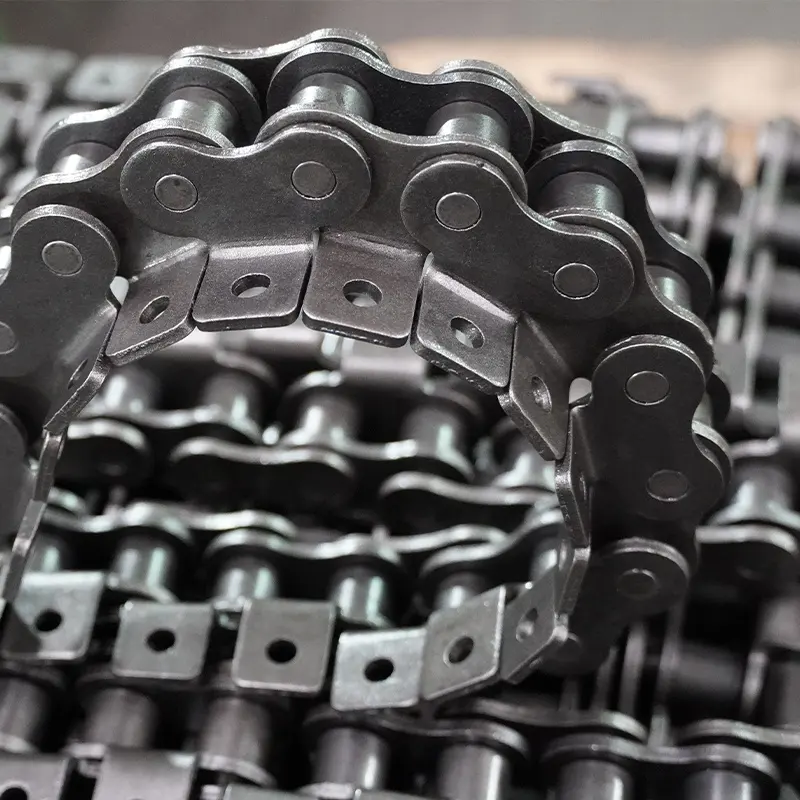
Can roller chains be repaired or must they be replaced?
When it comes to roller chains, repair options are limited, and in most cases, replacement is recommended. Here’s a detailed answer to the question:
1. Limited Repair Options: Roller chains are typically not designed to be easily repaired. The individual components of the chain, such as the pins, bushings, and rollers, undergo wear and fatigue over time, making it difficult to restore the chain to its original condition through repair.
2. Safety Considerations: Roller chains play a critical role in transmitting power and ensuring the safe operation of machinery or equipment. Any repair attempt that compromises the chain’s integrity or reduces its load-carrying capacity can pose safety risks. Therefore, it is generally recommended to replace worn or damaged roller chains to maintain the highest level of safety.
3. Cost-Effectiveness: In most cases, replacing a worn or damaged roller chain is more cost-effective than attempting to repair it. The cost of labor, specialized tools, and the uncertainty of the repaired chain’s performance and lifespan make replacement a more viable option.
4. System Integration: Roller chains are often part of a larger system or machinery. In some cases, repairing a single chain link or component may disrupt the system’s overall performance and cause compatibility issues. Replacing the chain ensures proper integration and avoids potential complications.
While repair options for roller chains are limited, regular inspection and maintenance can help identify wear or damage early on. Timely replacement of worn or damaged chains is crucial to prevent unexpected failures, reduce downtime, and maintain the efficiency and safety of the machinery or equipment.


editor by CX 2023-09-11