
Product Description
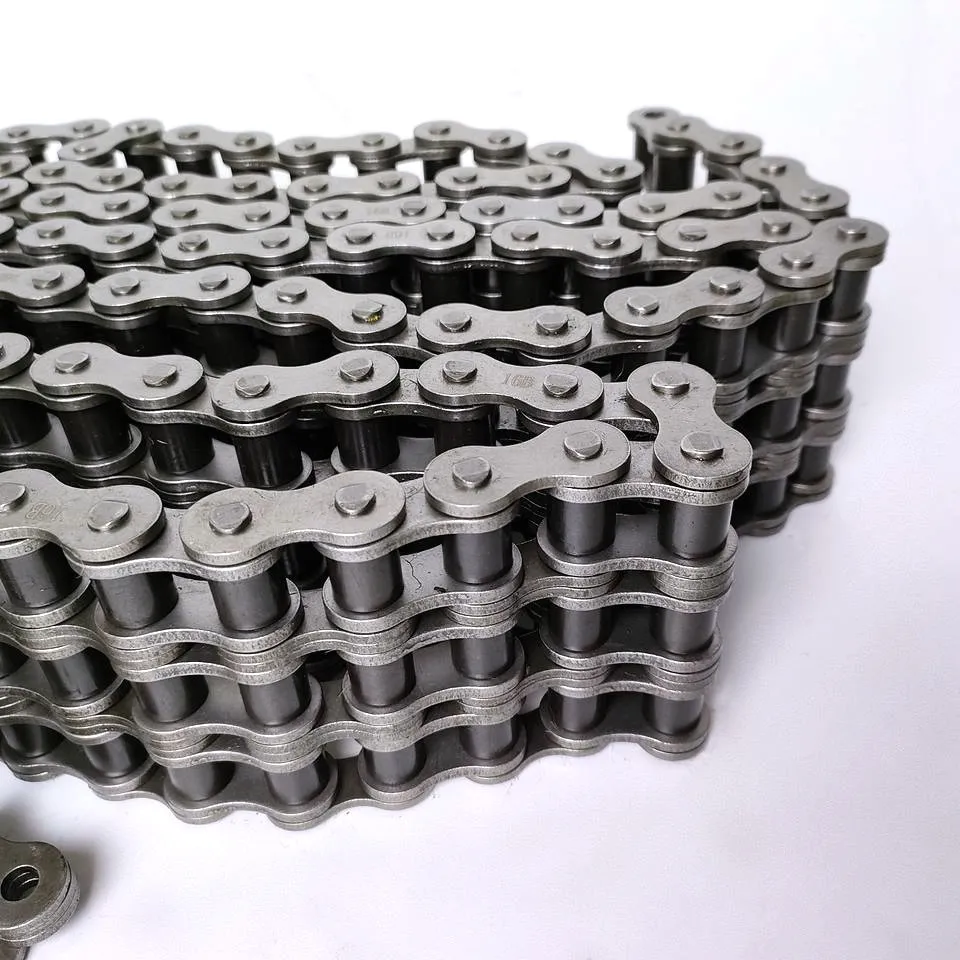
Detailed Photos
Product Description
| Item Name | Standrad transmission Roller Chains | Model | Series A, Series B |
| Row | Simplex Duplex Triplrex |
Application | Machinery Parts |
| Suiface Treament | netural/sand-blasted/shot-peening | Certification | ISO, ANSI, DIN, BS |
| Packing | Packaged in boxes and wooden cases, or packaged in reels and then on pallets | Port | Any sea port or airport in china |
Standard roller chains are a type of industrial chain that is commonly used in power transmission
applications. They consist of a series of cylindrical rollers that are linked together by side plates.
The rollers rotate within the links, transmitting power from 1 sprocket to another.
Standard roller chains are available in a range of sizes and configurations to fit different industrial
applications. They are made from high-quality materials, such as carbon steel or stainless steel,
which are resistant to wear, corrosion, and fatigue.
These chains are designed to provide smooth and efficient power transmission, with minimal energy
loss. They have a high load-bearing capacity, making them suitable for use in heavy-duty machinery,
such as conveyors, elevators, and industrial equipment.
Standard roller chains are also easy to install and maintain, with simple lubrication requirements to
ensure long-lasting performance. Overall, they offer a reliable and cost-effective solution for power
transmission in a wide range of industrial applications.
Other Products
Company Profile
Packaging & Shipping
After Sales Service
/* January 22, 2571 19:08:37 */!function(){function s(e,r){var a,o={};try{e&&e.split(“,”).forEach(function(e,t){e&&(a=e.match(/(.*?):(.*)$/))&&1
| Standard or Nonstandard: | Standard |
|---|---|
| Application: | Textile Machinery, Garment Machinery, Conveyer Equipment, Packaging Machinery, Electric Cars, Motorcycle, Food Machinery, Mining Equipment, Agricultural Machinery |
| Surface Treatment: | Netural/Sand-Blasted/Shot-Peening |
| Material: | Carbon Steel |
| Type: | Short Pitch Chain |
| Surface: | Shot Peening, Black, Blue or Original |
| Samples: |
US$ 1.28/Meter
1 Meter(Min.Order) | |
|---|
| Customization: |
Available
| Customized Request |
|---|
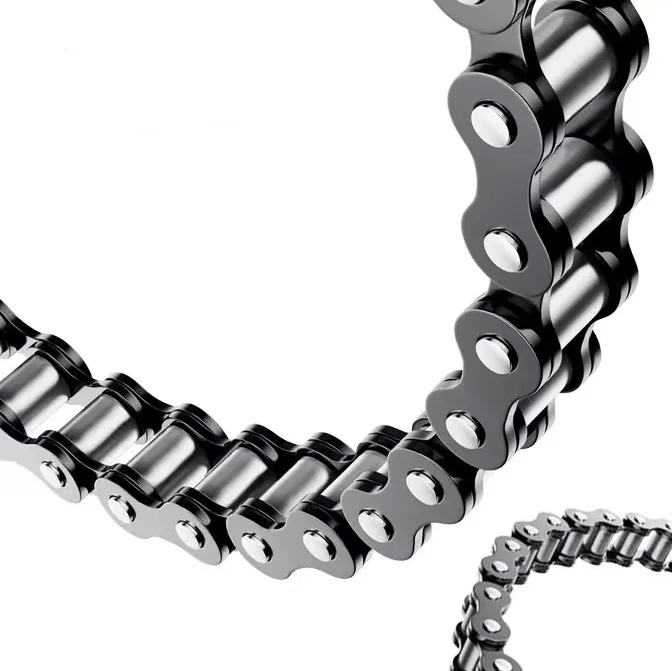
What are the advantages of using a roller chain over a cable or rope system?
Roller chains offer several advantages over cable or rope systems for power transmission. Here’s a detailed answer to the question:
1. Higher Efficiency: Roller chains provide a more efficient power transmission compared to cable or rope systems. They have lower friction losses, resulting in higher energy transfer and reduced power waste.
2. Precise and Reliable Motion: Roller chains offer precise and reliable motion control. They have minimal elongation and provide accurate positioning, making them suitable for applications that require precise speed and position control.
3. Greater Load Capacity: Roller chains have higher load-carrying capacity compared to cables or ropes of the same size. They can handle heavy loads and transmit high torque, making them suitable for applications that require robust power transmission.
4. Flexibility in Design: Roller chains offer flexibility in design and configuration. They can be easily customized to fit specific application requirements, such as different lengths, pitch sizes, and attachment options.
5. Durability and Longevity: Roller chains are known for their durability and long service life. They are constructed with high-quality materials and undergo heat treatment processes to enhance their strength and wear resistance, making them suitable for demanding industrial applications.
6. Maintenance and Replacement: Roller chains are relatively easy to maintain and replace. Lubrication and periodic inspection can help prolong their lifespan, and if a chain does wear out or break, it can be readily replaced with a new one, minimizing downtime.
7. Cost-Effective Solution: Roller chains are often a cost-effective solution for power transmission. They have a lower initial cost compared to some cable or rope systems and offer reliable performance over an extended period, resulting in lower maintenance and replacement costs.
While cable or rope systems have their own advantages in certain applications, roller chains excel in terms of efficiency, load capacity, precision, and durability, making them a popular choice for various industries, including manufacturing, automotive, agriculture, and more.
What are the benefits of using a roller chain in printing machinery?
Roller chains offer several advantages when used in printing machinery. Here’s a detailed answer to the question:
1. High Strength and Durability: Roller chains are designed to withstand heavy loads and provide high tensile strength, making them suitable for the demanding requirements of printing machinery. They can efficiently transmit power and handle the stress and torque generated during the printing process.
2. Precise and Reliable Power Transmission: Roller chains provide accurate and reliable power transmission, ensuring consistent and precise movement of the printing components. This is crucial for maintaining print quality, registration, and alignment of the printed material.
3. Wide Range of Speeds: Roller chains can accommodate a wide range of speeds, allowing for flexibility in printing machinery. Whether it’s high-speed printing or slower, more precise operations, roller chains can adapt to different speed requirements.
4. Easy Installation and Maintenance: Roller chains are relatively easy to install and maintain. They can be adjusted, lubricated, and replaced as needed, minimizing downtime and ensuring the continuous operation of printing machinery.
5. Versatility and Adaptability: Roller chains can be customized to meet specific requirements of printing machinery, such as different chain sizes, lengths, and attachments. This versatility allows for easy integration into various types of printing equipment and processes.
6. Cost-Effective Solution: Roller chains offer a cost-effective power transmission solution for printing machinery. They have a long service life, reducing the need for frequent replacements, and their availability in various sizes and configurations allows for efficient use in different printing applications.
In summary, the use of roller chains in printing machinery provides strength, reliability, precision, and versatility. They contribute to the smooth operation of the equipment, ensuring high-quality prints and increased productivity in printing applications.
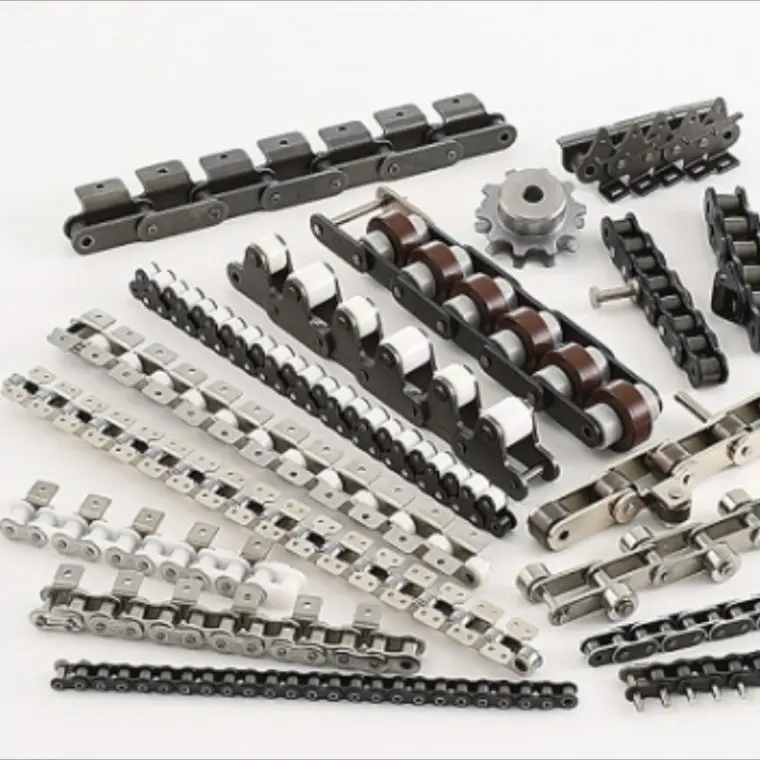
What is a roller chain and how does it work?
A roller chain is a type of transmission chain that is commonly used in various mechanical systems to transmit power and motion between rotating shafts. It consists of a series of interconnected links, including inner plates, outer plates, rollers, and pins. Here’s a detailed answer to the question:
A roller chain operates based on the principle of contact and rolling motion. The basic components of a roller chain include:
- Inner Plates: These are flat metal plates with holes through which the pins pass.
- Outer Plates: These are similar to inner plates and are connected to the inner plates through pins.
- Rollers: The rollers are cylindrical components that are positioned between the inner and outer plates. They have a slightly larger diameter than the pins, allowing them to freely rotate.
- Pins: The pins hold the inner and outer plates together and provide a pivot point for the rollers. They pass through the holes in the inner and outer plates and secure them in place.
When the roller chain is installed in a system, it wraps around a pair of sprockets. The sprockets have teeth that mesh with the rollers of the chain. As one sprocket rotates, it engages with the rollers and pulls the chain along, causing the other sprocket to rotate as well.
The working principle of a roller chain involves the following steps:
- Engagement: The chain is positioned around the sprockets, and the rollers engage with the teeth of the sprockets.
- Tension: The tension in the chain is created by the movement of the sprockets, which causes the chain to wrap tightly around them.
- Rolling Motion: As the sprockets rotate, they impart a rolling motion to the rollers. The rollers, in turn, rotate freely on the pins, allowing the chain to move smoothly along the sprockets.
- Power Transmission: The rotational motion of one sprocket is transferred to the other sprocket through the chain. This enables the transmission of power and motion between the two shafts connected to the sprockets.
Roller chains are widely used in various applications, including machinery, automobiles, motorcycles, bicycles, conveyors, and more. They offer high efficiency, reliability, and the ability to transmit substantial amounts of power. Regular maintenance, including lubrication and periodic inspection, is essential to ensure the proper functioning and longevity of a roller chain.


editor by CX 2024-04-17