
Product Description
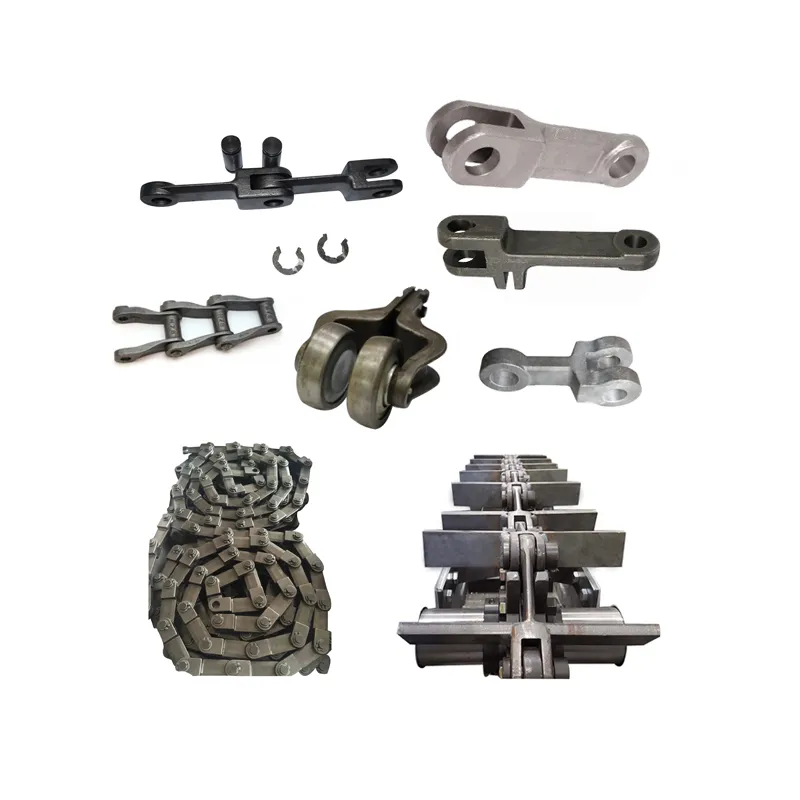
Harvester Chains of Carton Steel (415S)
PRODUCT SHOW
PRODUCT DETAILS
Product Parameters
| Standard | GB, ISO, ANSI, DIN |
| Type | Standard A and standard B precision roller chain, conveyor chain; |
| special chain with accessories, welding chain, leaf chain and sprocket | |
| ANSI chain No. | 40,50,60,80,100,120,140,160,180,200,240; |
| C40,C50,C60,C80,C100,C120,C140,C160; | |
| DIN/ISO chain No. | 08A,10A,12A,16A,20A,24A,28A,32A,36A,40A,48A; |
| C08A,C10A,C12A,C16A,C20A,C24A,C28A,C32A; | |
| Application | Food processing, pharmaceutical and chemical industries, electronics, machinery; |
| household appliances, automotive manufacturing, metallurgy, sewage treatment | |
| Series | A series, B series |
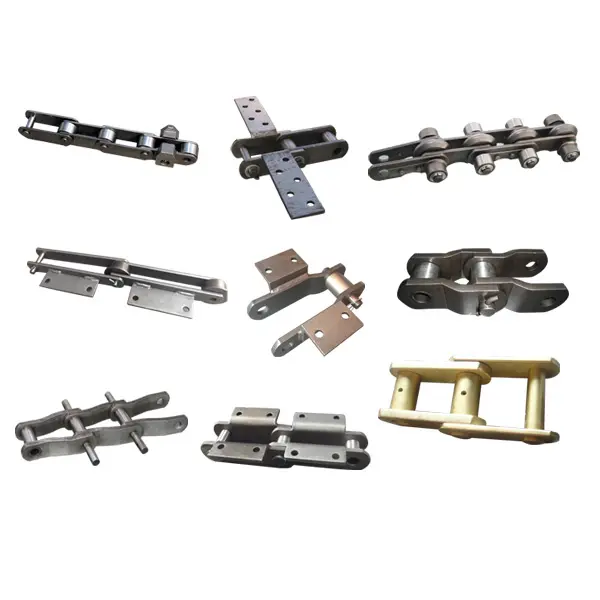
More Products
Advantage
Certifications
DETAILS ABOUT CHINAMFG CHAIN
Exhibition
Workshop
Application
Packaging Details
Shipping
FAQ
1. Are you a manufacturer or trade Company?
We are a factory founded in 1997 with a trade team for international service.
2. What terms of payment do you usually use?
T/T 30% deposit and 70% against document, Western Union, L/C at sight
3. What is your lead time for your goods?
Normally 35 days after confirmed order. 30 days could be available in the low season for some items (during May to July), and 45 days during the new year and hot season ( Jan to March).
4. Samples
For customers who need sample confirmation before ordering, please bear in mind that the following policy will be adopted:
1) All samples are free of charge with a maximum value not exceeding USD 100.
2) The courier cost for the first-time sample sending will be charged by the consignee. We will send the samples with freight to be collected. So please inform your account with FedEx, UPS, DHL, or TNT so that we can proceed promptly.
3) The first-time courier cost will be totally deducted from the contract value of the trial cooperation.
/* January 22, 2571 19:08:37 */!function(){function s(e,r){var a,o={};try{e&&e.split(“,”).forEach(function(e,t){e&&(a=e.match(/(.*?):(.*)$/))&&1
| Usage: | Transmission Chain, Conveyor Chain, Agricultural Machine |
|---|---|
| Material: | Alloy/Carbon Steel |
| Surface Treatment: | Polishing |
| Customization: |
Available
| Customized Request |
|---|
.shipping-cost-tm .tm-status-off{background: none;padding:0;color: #1470cc}
| Shipping Cost:
Estimated freight per unit. |
about shipping cost and estimated delivery time. |
|---|
| Payment Method: |
|
|---|---|
|
Initial Payment Full Payment |
| Currency: | US$ |
|---|
| Return&refunds: | You can apply for a refund up to 30 days after receipt of the products. |
|---|
Can agricultural chains be used in hydroponics and vertical farming systems?
Yes, agricultural chains can be used in hydroponics and vertical farming systems to facilitate various processes and functions within these innovative farming methods.
In hydroponics, which is a soilless method of cultivating plants, agricultural chains are employed in systems such as:
- Nutrient Delivery: Agricultural chains are utilized to transport nutrient solutions to the plant roots in hydroponic setups, ensuring that plants receive the necessary minerals and water for their growth.
- Vertical Grow Systems: In vertical farming, where plants are grown in stacked layers or vertical towers, agricultural chains play a critical role in moving the platforms or shelves that hold the plants, allowing for efficient space utilization and easy access for maintenance.
- Conveyor Systems: Agricultural chains are used in conveyor systems to transport plants, seedlings, or harvested crops within the hydroponic facility, streamlining the production process.
- Irrigation: Chains can be part of automated irrigation systems that deliver water to the plants at regular intervals, ensuring precise and consistent hydration.
Vertical farming, on the other hand, relies on controlled environments and artificial lighting to optimize plant growth in limited spaces. Agricultural chains are integral to this farming method for the following reasons:
- Automated Systems: Chains are used in automated setups that move plant trays or containers, allowing each plant to receive an appropriate amount of light, water, and nutrients.
- Space Efficiency: Agricultural chains enable vertical farming systems to maximize space utilization, making them particularly suitable for urban environments and areas with limited land availability.
- Plant Positioning: Chains help position plants at optimal angles to receive the most sunlight or artificial light, promoting uniform growth and consistent yields.
Overall, agricultural chains play a vital role in hydroponics and vertical farming, contributing to increased efficiency, precise nutrient delivery, and the ability to grow crops in non-traditional settings. These advanced farming systems leverage the benefits of agricultural chains to meet the demands of sustainable and high-yield crop production for the future.
What are the common challenges faced by agricultural chains in the field?
Agricultural chains encounter several challenges in the field due to the demanding and harsh conditions of farming operations. Some of the common challenges include:
- Abrasion and Wear: Agricultural chains often operate in dusty and abrasive environments. Soil particles, crop residues, and other debris can cause significant wear on the chain’s components, leading to reduced efficiency and potential failure.
- Corrosion: Exposure to moisture, fertilizers, and pesticides can cause corrosion in agricultural chains, especially if they are not adequately protected. Corrosion weakens the chain and shortens its lifespan.
- High Loads and Shock Loads: Farming equipment frequently experiences high loads and shock loads during operations, such as when encountering tough soil or harvesting dense crops. These sudden force variations can put immense stress on the chains, leading to fatigue and breakage.
- Misalignment: Improper alignment of sprockets and other chain components can result in uneven wear and reduced performance. Misalignment is a common issue that can lead to premature failure of the agricultural chain.
- Temperature Extremes: Agricultural chains may be subjected to extreme temperature fluctuations, from hot summer days to freezing winter nights. Such temperature variations can affect the chain’s material properties and lubrication, impacting its performance.
- Contamination: The presence of dirt, debris, or crop residues can contaminate the chain’s lubrication, reducing its effectiveness and increasing friction.
To address these challenges, it is essential to choose high-quality agricultural chains made from durable materials and provide regular maintenance. Proper lubrication, alignment, and protection from environmental factors can significantly extend the lifespan and reliability of agricultural chains in the field.
How are agricultural chains used in modern agricultural machinery?
In modern agricultural machinery, agricultural chains are employed in various critical applications to facilitate the efficient and productive operation of farming equipment. Some common uses of agricultural chains in modern agricultural machinery include:
- Tractors: Agricultural chains are essential components in tractors, where they are part of the drive system, transmitting power from the engine to the wheels or tracks, allowing the tractor to move across the field and perform various tasks.
- Combine Harvesters: In combine harvesters, agricultural chains play a crucial role in driving the harvesting mechanism and the threshing units. They enable the cutting, separating, and collecting of crops during the harvesting process.
- Planting Machines: Agricultural chains are used in planting machines to distribute seeds evenly and at the desired spacing while planting crops. They ensure accurate and efficient seed placement for optimal plant growth.
- Grain Handling Equipment: Within grain handling equipment like grain elevators and conveyors, agricultural chains are employed to move crops, seeds, and grains from one point to another during storage and transportation.
- Hay Balers: Agricultural chains are utilized in hay balers to compress and bind hay or straw into bales for easy handling, storage, and transportation.
- Tillage Equipment: In tillage equipment, agricultural chains help to prepare the soil for planting by turning and tilling the ground, readying it for seed sowing.
- Manure Spreaders: Agricultural chains are used in manure spreaders to distribute manure evenly across the fields, improving soil fertility and promoting crop growth.
Modern agricultural chains are designed to withstand heavy loads, high-speed operations, and adverse environmental conditions commonly encountered in farming applications. They are made from durable materials and undergo precision manufacturing to ensure reliable performance and longevity.
Regular maintenance, including lubrication and proper tensioning, is crucial to keep agricultural chains in optimal working condition and to prevent premature wear. With the advancement of technology and material science, modern agricultural chains continue to play a vital role in improving the efficiency and productivity of farming operations worldwide.


editor by CX 2024-04-29